
Two families just met at the drinks. Someone already wants a cousin from one side to sit with an uncle from the other and break the ice on camera. I host the two-microphone table. When two families just met, a wedding podcast is a scene two people already share — not a roast across a cold aisle, and not a verdict on the marriage you just watched from the chairs.
A table often hears “mix them so they bond.” The pattern looks like this: two strangers, two mics, a handshake that thinks it is a story. Pair inside a side. Ask what happened. Nobody named here needed a verdict.
- Treat a first meeting as a scene, not a roast.
- Pair inside a side, not across a cold aisle.
- Write prompts that ask for a scene, not a verdict.
- Skip the landmines on a first shared table.
- Let people watch one round before they sit.
- Know what you still keep if the sides never mix.
- Send the two-family note with the date.
Who opens the night lives in who sits first at the wedding podcast table. The card list lives in wedding podcast questions that get real stories. Neutral process questions sit on questions. This page is only the two-family rule: same-side pair, scene not verdict, watch, then the note.
A first meeting is not a roast
A wedding podcast is two chairs and two broadcast mics at the party. Guests sit, talk, leave voices on video. Entertainment now. A keep after. Not a Spotify show. Barcelona is the original market. Coverage is Spain. A first meeting is a different job. Two sides who shared a toast twenty minutes ago do not owe the linen a set.
A table often hears the brave recce line: “Let the best man roast the other family. Ice broken.” That is a speech with extra chairs. I do not book a verdict as the opener. I ask for a kitchen they already share.
The pattern looks like this. Someone wants a bonding clip from the same two mics. Nobody named here needed a roast about people they just hugged. They needed “tell the travel story you already have,” not a panel across the aisle.
Recommendation: write the first meeting as a scene, not a roast. “Same-side friends sit. They tell what happened.” If the line says ice-breaker or a joke about the other family, rewrite it.
Pair inside a side, not across a cold aisle
Two chairs cannot invent a shared kitchen. Seat a cousin from one family next to an uncle who met the couple at the gate and you have built a handshake. The file sounds like a job interview with cava. The keep you hired was two mouths that already know the joke.
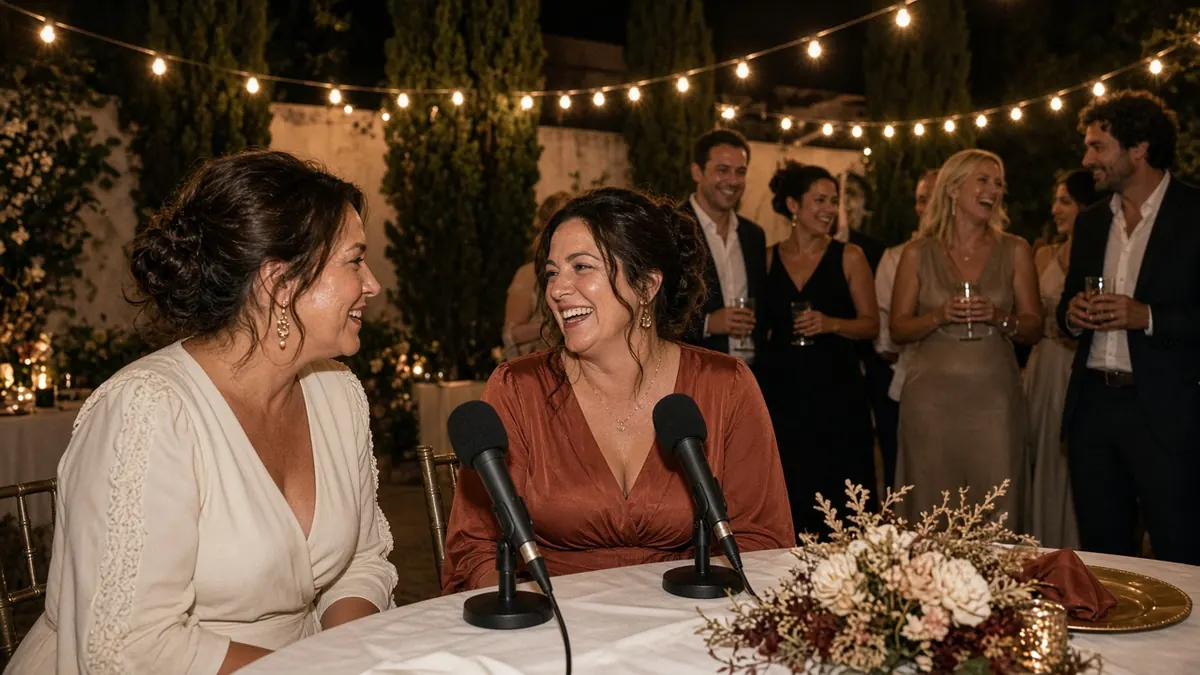
A table often hears the planner whisper: “Mix the sides so they bond on camera.” Visible mixing is not a story. The pattern looks like this. Two polite strangers invent adjectives. They thank each other for coming. Nobody named here needed a census across the aisle. They needed two people who already sat at dinner together.
Who sits first — talker, witness, not the couple — stays on the opener page. This page only refuses a cold pair. If two people from different sides later ask to sit, that is a later sit, not the rule you write before the day.
Recommendation: mark the first chairs as same-side. “Pair people who already share a scene.” If the floor note says mix the families at the mics, erase that line.
Prompts that ask for a scene, not a verdict
A toast asks for a performance. A verdict prompt asks for a review of people you just met. A scene prompt asks what happened in a room two guests already shared. The full card list lives on the questions page. This page only kills the review.

The pattern looks like this. A well-meaning card says “what do you think of them.” Mouths freeze, or they invent kind, generous, lucky. A table often hears a review and calls it a memory. Nobody named here needed a hiring panel. They needed the delayed flight or the first terrible tapa.
Recommendation: write the job as a scene two people already share. “Tell the kitchen or the travel, not a verdict on the marriage.” If the card asks anyone to rate the other side, replace it.
What to skip on a first shared table
The first take teaches both families what the furniture is for. Skip anything that sounds like a courtroom or a roast of the people they just kissed on both cheeks.
| First-table idea | What the file becomes | Use it? |
|---|---|---|
| Roast the other family | A set, then a chill | No |
| What do you think of them | A verdict | No |
| Mix strangers to bond | A handshake | No |
| Same-side kitchen or travel | A conversation | Yes |
A table often hears the cute dare: “Who is the funnier family?” Funny for one second. Then the keep is a score. Exes, money, and fertility already leave the card list on the questions page. This page adds the first-meeting extras: who is better, who travelled farther. Those are verdicts wearing a smile.
The pattern looks like this. Someone writes a bonding quiz so the sides “really meet.” Two guests perform gratitude. Nobody named here needed homework. They needed a scene they already lived.
Recommendation: if the first card reviews a family, skip it. Keep the roast off a first shared table. A later sit can be looser if both people ask.
Let people watch one round
The other side does not owe the chairs a performance they have not seen. Let one same-side pair sit. Let the drinks pocket watch. Shy mouths copy a conversation, not a briefing.

A table often hears “make the other family go next so it is fair.” Fair is a census. The pattern looks like this. One pair laughs. The watching side sees two friends, not a test. Later they take a chair, or they stay with the cava. Nobody named here needed a rotation by surname.
General shy-watch help lives with how mouths start. This page only says the first-meeting watch is a same-side demo, not a mixed ice-breaker.
Recommendation: write the watch as optional. “One same-side round. The other side may watch or wander.” If the brief assigns a sit to every surname, cut that line.
What you still keep
They keep the talks. Video and audio of two people who already shared a scene. They do not keep a bonding gallery of strangers. A sitting that stayed same-side is still a keep. A night where the two families never mixed on the mics is not a failed chapter. Sitting stays optional. We do not run a census.
A table often hears “if they never sit together, the whole hire is wasted.” That is a speech fear. The pattern looks like this. One pair told the kitchen. Another told the delayed train. The file the couple replays is those two. Nobody named here needed a refund story because an uncle did not interview an aunt. They needed permission to keep the conversations they have.
Recommendation: write the keep as conversation files, not a mixed-family proof. “We keep the talks. We do not hunt a handshake from two mics.” If the line promises every side in every file, rewrite it.
Send the two-family note with the date
The worst time to invent a pairing rule is while two strangers are already smiling at a mic. Add four two-family lines to the same note as date and venue.
| Moment | Table job | Sit? |
|---|---|---|
| Someone wants a roast of the other side | First meeting is not a roast | Same-side scene instead |
| Planner mixes strangers “to bond” | Pair inside a side | Only a shared scene |
| A card asks what they think of them | Scene, not a verdict | Yes, with a scene card |
| The other side has not seen a sit | Let them watch one round | Optional after |
| The sides never mix on the mics | Keep the talks you have | No chase |
Table language on Instagram is setup films, not a named wedding. We do not publish a two-family clock. The window is confirmed when you inquire.
- A first meeting is not a roast.
- Pair inside a side, not across a cold aisle.
- Ask for a scene, not a verdict; let people watch one round.
- Keep the conversation files even if the sides never mix.
Recommendation: the same four lines with the couple, then the planner. Send the date and those lines through Check availability.
What to do next
Name the first meeting as a scene. Pair inside a side. Kill the verdict card. Skip the roast of the other family. Let people watch. If the date is close, message WhatsApp. When the date and the two-family note sit in one place, Check availability.
Frequently asked questions
Should we mix the two families at the mics so they bond?
No. Pair people who already share a scene. Mixing strangers makes a handshake. Bonding happens at the drinks. The table keeps a talk.
Can the first sit be a roast about the other side?
No. A first meeting is not a roast. Ask for a kitchen or a travel two people already lived. A set teaches the room the wrong job.
What if two people from different sides ask to sit together?
Let them, later. That is a asked-for sit, not the rule you write before the day. Do not assign a mixed pair in the brief.
Do we need a host doing stand-up as an ice-breaker?
No. You need a host who can keep the first chairs same-side and hand a scene. Stand-up turns the aisle into a second stage.
What if one side never sits?
Let them. Sitting is optional. Keep the talks you have. Do not chase a surname down the terrace as if the night failed.
Do we still keep the files if nobody mixed on camera?
Yes. The couple keeps talks, not a mixed-family proof from this furniture. A same-side chapter is still a chapter.
What should we send with the date?
Four lines plus the house: not a roast; pair inside a side; scene not verdict, then a watch; keep the talks even if the sides never mix. We confirm what fits.