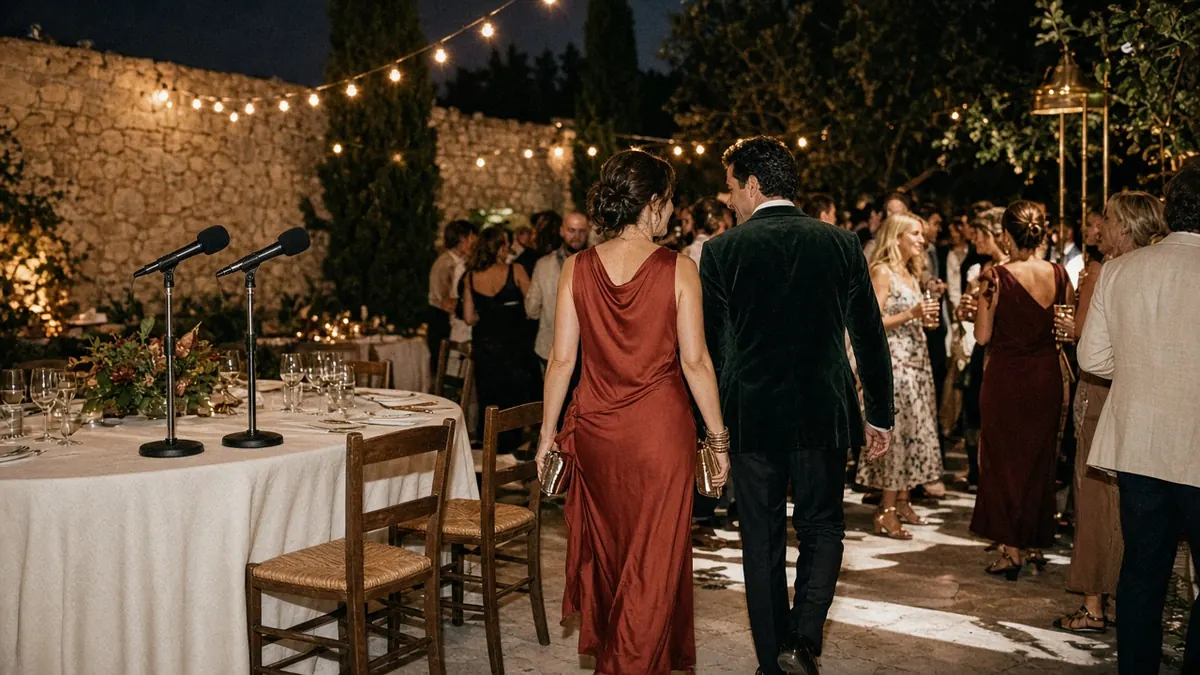
The dancefloor already owns the room and two chairs are still warm, like the night owes them one more sit. Or the other way: someone bags the mics while the shy cousin is still hunting a drink. I host the two-microphone table. When to close the wedding podcast table is not a fade into the bass. It is a chapter mark you write before the party starts, then actually keep.
A table often hears the last useful pair leave and the next one never arrive. The pattern looks like this: empty chairs, a brighter dancefloor, a guest too late for a yes. Close as a mark, not a fade. Nobody named here.
- Treat closing as a chapter mark, not a fade.
- Close after the last useful pair.
- Close before the room is only dancing.
- Close when it is too late for consent to a keepsake.
- Leave guests a quiet table they can still see.
- Keep what you already recorded.
- Send the close mark with the hours.
How long the chapter runs lives in how long a wedding podcast table should run. A sit that goes sharp lives in what to do when a wedding podcast story goes sideways. Extra odds sit on questions. This page is only the close: when the chairs go quiet.
Closing is a chapter mark, not a fade
A wedding podcast, here, is two chairs and two broadcast mics at the party. Guests sit if they want, talk to each other, leave voices and stories on video. Entertainment during the night. A keep after. Not a Spotify show. Not a booth left plugged in for security. Barcelona is the original market. Coverage is Spain.
A table often hears “leave it up, people will wander back.” That is a fade. Furniture without a close becomes scenery, then a dare. The pattern looks like this. Hours were booked. Nobody wrote the last minute. The DJ owns the room. Two empty chairs wait like a museum. Or someone packs because the timeline only said start. Nobody named here needed endurance. They needed a sentence: the chapter ends here.
Recommendation: write the close as a mark, the way you write the start. “Chairs go quiet after the last useful pair, before the room is only dancing.” If the line says fade, all night, or until the after-party invents a sit, rewrite it.
After the last useful pair
A useful pair can still talk to each other. They sit because they want a story, not because a friend dared them from the dancefloor. When that pair stands and the next mouths are a joke, the chapter is done. Do not wait for a census that never arrives.

The pattern looks like this. Two friends tell a kitchen story. They laugh. They stand. Then the chairs sit empty long enough that someone treats them like a stunt. A table often hears the sentence after the useful pair, not during it. Nobody named here failed as hosts. The close failed. We do not invent how many pairs fit a window. Two chairs at a time is the mechanic. Staying open after useful mouths leave is hope wearing linen.
Recommendation: watch the last pair who still sound like friends. When they stand, look at the room once. If the next sit would be a performance, close. Do not hunt one more aunt in the olives.
Before the room is only dancing
A dance-only room has feet, not wanderers. Bass owns every sentence. People shout into a friend’s ear and call it conversation. That is a party. It is a bad recording chapter. Close before the chairs compete with the floor.
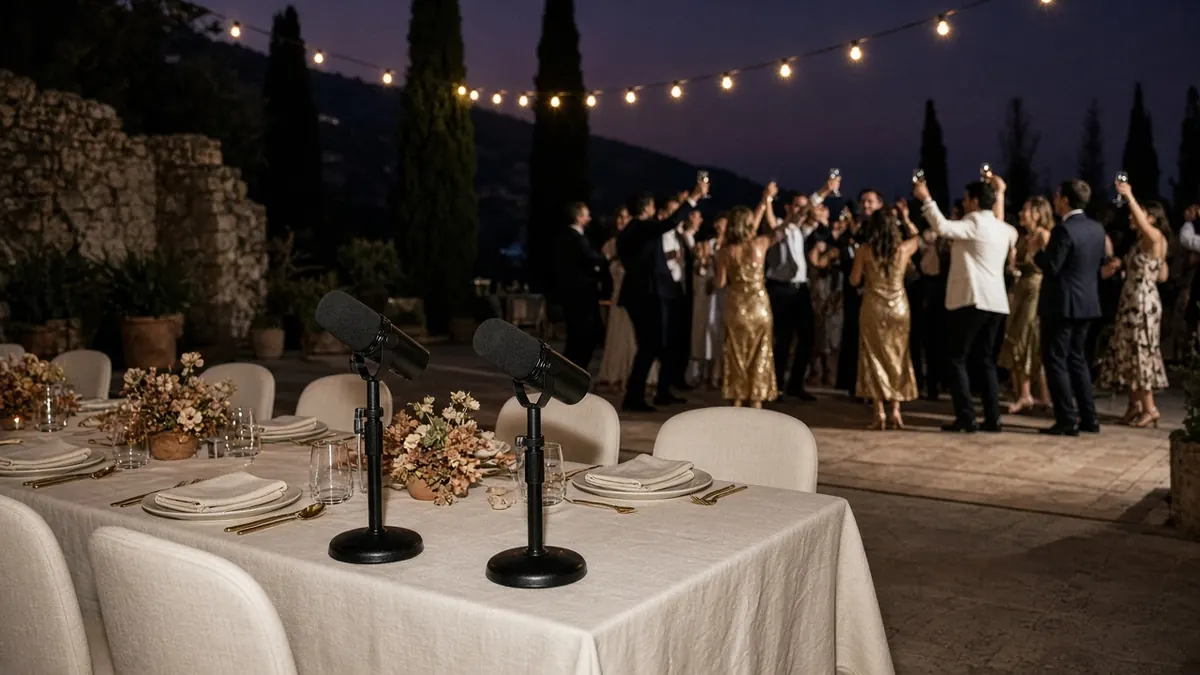
A table often hears a planner say the after-party will feed the mics. The pattern looks like this. Cocktail still had wanderers. Dinner sat. Then the floor lit. Two mics waited like museum pieces. Fun behind. Silence in the chairs — or a toast voice yelled over the wash. Nobody named here ruined the set. The chapter outlived the mouths. How long you hired is a different page. This page only asks: wandering, or only dancing? If only dancing, the close already happened.
Recommendation: put the close before the room is a dancefloor with leftover furniture. If a line promises a midnight encore as the same chapter, cut it. A pause for a first dance is not this close — that table reopens. This one does not.
Too late for consent to a keepsake
Sitting down is a small yes to talk. A room that is only late, loud, and dared cannot give a yes worth a file. This is a close rule for the whole pocket, not a scolding for one guest. The sideways page owns a sit that goes sharp. This page owns the minute the room itself is too late.
The pattern looks like this. Friends push. Someone who would not send this voice note tomorrow wants “one funny take.” A table often hears the dare after the useful pairs have gone. Nobody named here needed a souvenir of the stagger. Kind is faster than clever. If the next person needs the chair to stay upright, do not seat them — and do not keep the furniture fishing. Water, a friend, the floor. We do not invent a staff count. If they can talk to a friend like a human, they can sit. If the room only produces dares, close.
Recommendation: write one planner line. “If the room would not send this voice note tomorrow, the chairs go quiet tonight.” If a guest still needs a pause during an earlier sit, that move lives on the sideways page. Do not reprint it as a close.
What guests still see when chairs go quiet
Close is not a crate in the aisle. Guests should still see a table that belongs to the party: linen, two mics, empty chairs that look finished, not abandoned. Packing mid-song turns furniture into leftover vendor kit. People walk around cases.

A table often hears the kind teardown that kills the mood: lids, tape, a cable across a dancing foot. The pattern looks like this. The chapter ended. Somebody rushed the cases because the note said stop. The room read it as a problem. Nobody named here wanted a construction site. They wanted quiet chairs that still look like a corner people chose. Setup films of the table live on Instagram — furniture, not a named wedding. A half-packed table is a corridor.
Recommendation: leave the chairs readable for a beat after the last sit. Soft close. Cases later, off the dance path. If a line says strike during the first chorus, cut it.
What the couple still keeps
Closing does not erase the night. You keep the conversations that already landed. The keep page owns the files. This page only says: an early close is not a failed hire. Empty chairs after a good pair are a mark, not a refund story.
The pattern looks like this. Someone watches two quiet chairs and decides the chapter “didn’t work” because the after-party did not sit. A table often hears that panic while the useful kitchen story is already on disk. Nobody named here lost the file because we named a close. We do not invent a delivery list, a clock, or a count of takes. Two people talked. That is the product. A shy guest after the mark gets a drink and a kind no — not a secret extra chapter.
Recommendation: tell the couple the close keeps what already happened. If they want the object list, send them to the keep page. Do not promise a late sit as a make-good.
Send the close mark with the hours
The worst time to invent a close is when the bass is already in the glasses. Send the same mark with the couple, then the planner: hours you already chose, then when those hours end. Venue name belongs with the date. Do not send a fade. Do not send “see how we feel.”
- Chapter mark, not a fade: the table ends; it does not dissolve into the after-party.
- Last useful pair: close when friends have stood and the next sit would be a performance.
- Dance-only room: close before bass owns every sentence; a first-dance pause is a different move.
- Too-late yes: if the room only produces dares, chairs go quiet; leave furniture guests can still see; keep what already landed.
Recommendation: paste those four with the hours and the house. If the date and the close mark are the question, Check availability with the mark in the note.
What to do next
Name the mark. Write last useful pair, dance-only, too-late yes. Leave quiet chairs, not a crate. If the date is close, message WhatsApp. When the hours and the close sit in one note, Check availability.
Frequently asked questions
When should we close the wedding podcast table?
Close as a chapter mark, not a fade: after the last useful pair, before the room is only dancing, and when it is too late for a keepsake yes. Leave quiet chairs guests can still see. You keep what already landed. Send the mark with the hours.
Should we leave the chairs up until the after-party?
No. An after-party is often a dance-only room. Fade language turns leftover chairs into a dare. Close before bass owns the sentences.
What if a shy guest arrives after we closed?
Kind no. A drink. Not a secret extra chapter in the dark. Closing does not erase the sits that already happened. Do not hunt one more aunt after the mark.
Is closing the same as pausing for speeches or the first dance?
No. A pause stops the chairs and then reopens. A close ends the chapter. Do not brief a fade and call it a pause.
What if the last pair is too drunk to sit?
Do not seat a dare. If the room only produces those sits, close. The sideways page owns a take that goes sharp earlier. This page owns the minute the pocket itself is too late.
Do we lose the files if we close early?
No. You keep the conversations that already landed. An early close is a mark, not an erase. We do not invent a file list or a refund story.
What do we send with the hours?
Four lines plus the house: chapter mark not a fade; last useful pair; dance-only close; too-late yes, quiet chairs, keep what landed. Check the date and the venue.