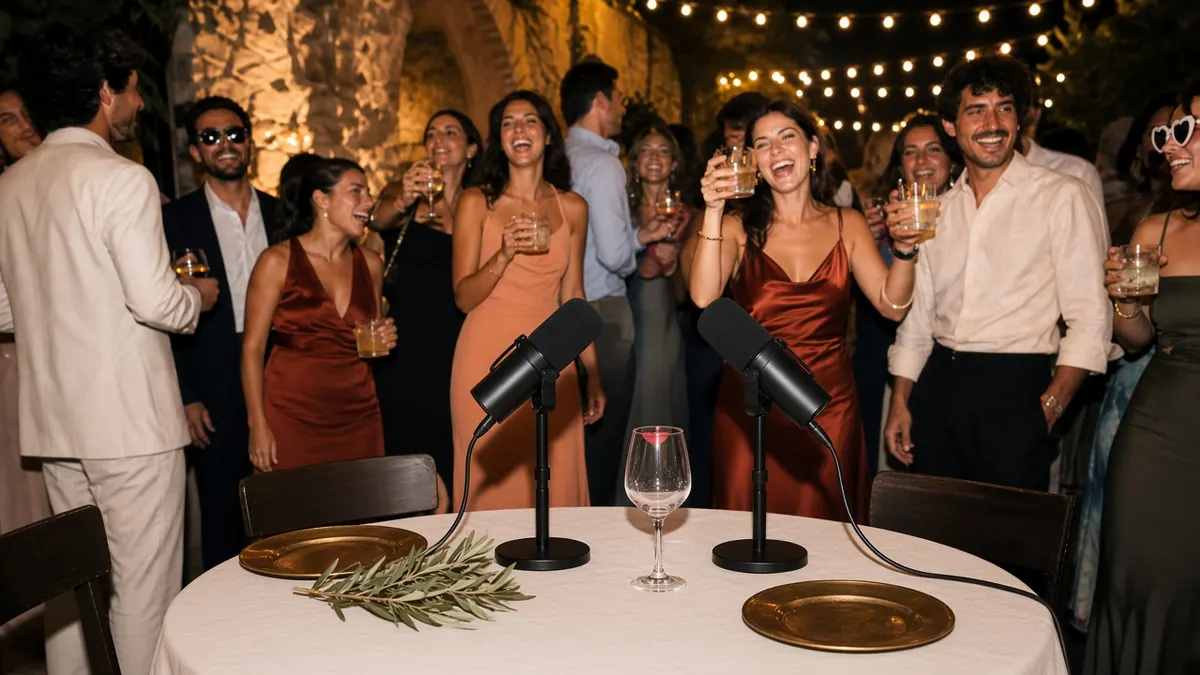
The best man sits with a grin that already practiced a toast. Two drinks later the kitchen story is gone, and a 2014 joke is wearing two microphones. I host the two-microphone table. What to do when a wedding podcast story goes sideways is not a viral clip for the group chat. It is a pause, a boundary, and a file the couple can still love in ten years.
A table often hears a story go sharp before the room does. The pattern looks like this: two people, two mics, one joke that needed a dinner, not a keepsake. Pause. Ask for the memory. Stand up if it is only heat. Nobody named here.
- Name the failure modes without humiliation content.
- Treat the pause as a feature, not a scene.
- Keep a roast from becoming the memory.
- Do not seat a guest too drunk to consent to a keepsake.
- Let tears stay if the guest wants them.
- Let the couple decide after the night.
- Brief the planner on boundaries before the day.
How mouths open is in how to get wedding guests talking on camera. Practical yes/no lives on questions. This page is the sideways hour: what to do when the story is already going wrong.
Name the failure modes without humiliation content
Sideways is not “a guest had a personality.” Sideways is a file the couple will flinch at. Name the modes so you can stop the right one. Do not name the relatives. Funny and warm is the line. Viral shame is not.
| Mode | What it sounds like | Move |
|---|---|---|
| Roast with heat | The joke about a parent that needed a room, not a file | Pause. Ask for the story under it |
| Landmine | Exes, money, who should not have married whom | Stand up. Return to the party |
| Too drunk | Slur, dare, “one more for the camera” | Do not seat. Water, friend, dancefloor |
| Tears | A voice breaks on a true thing | Keep if they want. Pause if they ask |
| Freeze | A resume. A thank-you for the opportunity | Smaller scene. Or let them leave kindly |
A table often hears two of these in one cocktail hour. Nobody named here. If you would not repeat it at breakfast with both families, it does not belong on video.
Recommendation: print the five modes for the wedding party. One page. No names. If a mode starts, they already know the move.
Pause is a feature
A vintage phone cannot pause you. A QR booth already uploaded. A two-mic table can stop in the sentence. That is the whole advantage. I need a hand on the table and a kind face.
The pattern looks like this. Someone laughs too hard at a line that was not kind. I say we take a breath. I ask what happened in the kitchen, or on the trip, or in the doorway. If the next sentence is a memory, we keep rolling. If the next sentence is sharper, we stand up and we go find a drink.
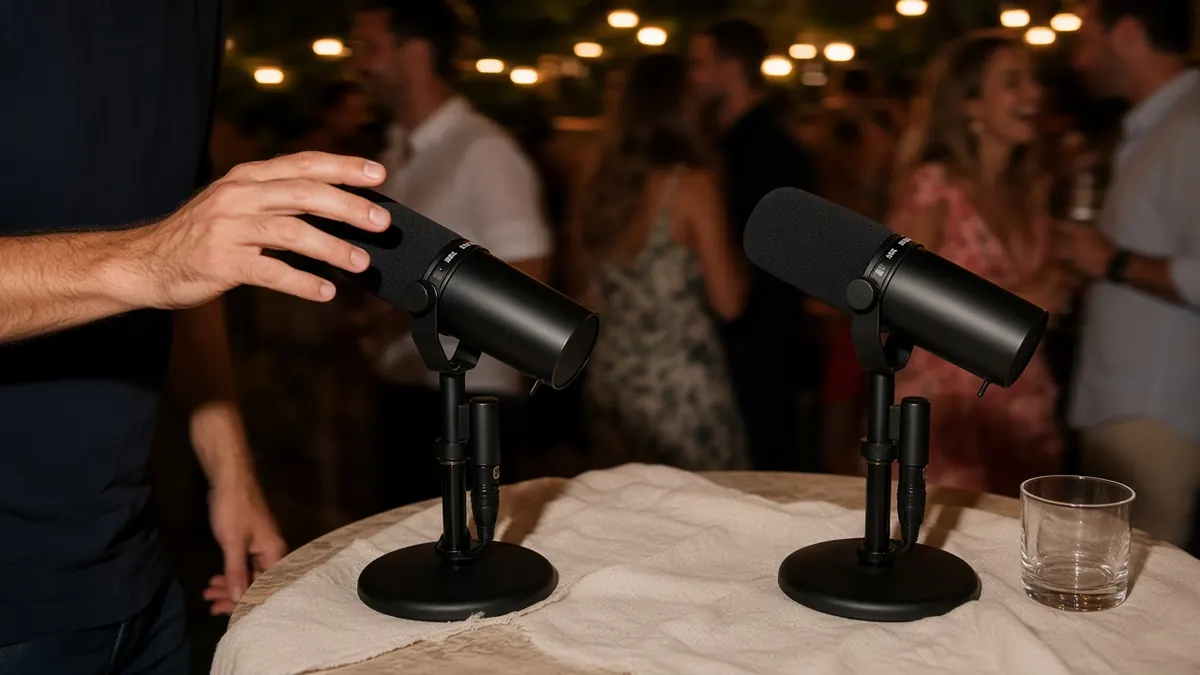
Toast guides tell an MC to thank the speaker and blame the timeline. Same warmth, smaller room: two people and a file. Waiting for a lull is polite. Waiting through a cruel punchline is not. A pause is not a scolding. Guests who sit said a small yes. They did not say yes to a roast with a red light on.
Recommendation: agree the pause line before the day. Short. “Let’s keep the story, not the heat.” Then stand if heat wins.
Roast vs memory
A roast needs a room. A memory needs two people who already lived it. Wedding podcast stories go sideways when the table is used as a second best-man speech.
Speech blogs still help, even when they write for a mic in the air. A tease the person would actually laugh at can stay. A line about an ex, money, a body, or a night that needed substances should not. If the joke dies, do not double down. The file will keep the double-down forever.
The pattern looks like this. Two friends start in a kitchen. Then one of them “improves” it for the camera: a parent, a previous partner, a dare from the group chat. Nobody named here. I pause. I ask for the kitchen again. If they cannot find it, we are done.

The test is simple. Would both people still want this clip if nobody else ever saw it? If the laugh needs an audience, it is a roast. If the story still works in a quiet kitchen next year, it is a memory.
Recommendation: brief the wedding party once. The table collects memories. It is not a second toast. Cut roast-bait cards before the night so you need this pause less.
Too drunk to consent to a keepsake
Sitting down is a yes to talk. A guest who cannot walk a straight line to the chair cannot give a yes worth a file. This is a keepsake rule.
Venue guides already know the pattern: private, short, water, a friend, no public scene. The couple should not be the bouncer. The planner or a trusted person walks them toward the party. I do not record “one funny take” as a souvenir of the stagger.
A table often hears the dare. Friends push. The mic looks like a stunt. I smile. I say not this round. Kind is faster than clever. If they argue, I still do not seat them. A fight at the table is another sideways story. We will not invent a staff count. If they can talk to a friend, they can sit. If they need the chair to stay upright, they cannot.
Recommendation: write one line for the planner. “If they would not send this voice note tomorrow, they do not sit tonight.”
Tears that should stay
Tears are not a failure mode. A roast is. A landmine is. Crying on a true thing is often the file the couple will keep.
The pattern looks like this. Two people start a travel story. The voice breaks on the part where someone showed up. Nobody named here. I do not rush in with a joke. I wait. If they want to keep going, we keep going. If they ask to stop, we stop. That take can still be the one. “Do you want this?” is enough.
English and Spanish can live in one wet sentence. Let them. I do not translate grief for the mic. Forcing a close-up of a frightened face is not a keepsake.
Recommendation: tell the couple in advance that a tender take may exist. It is not drama. It is a wedding. Keep it if the guest wants it kept.
What the couple decides after the night
The night is for pausing. The morning is for choosing. Phone guestbooks let you delete a message later. We would rather stop the bad take before it becomes a morning problem. What remains is still the couple’s to keep or to set aside.
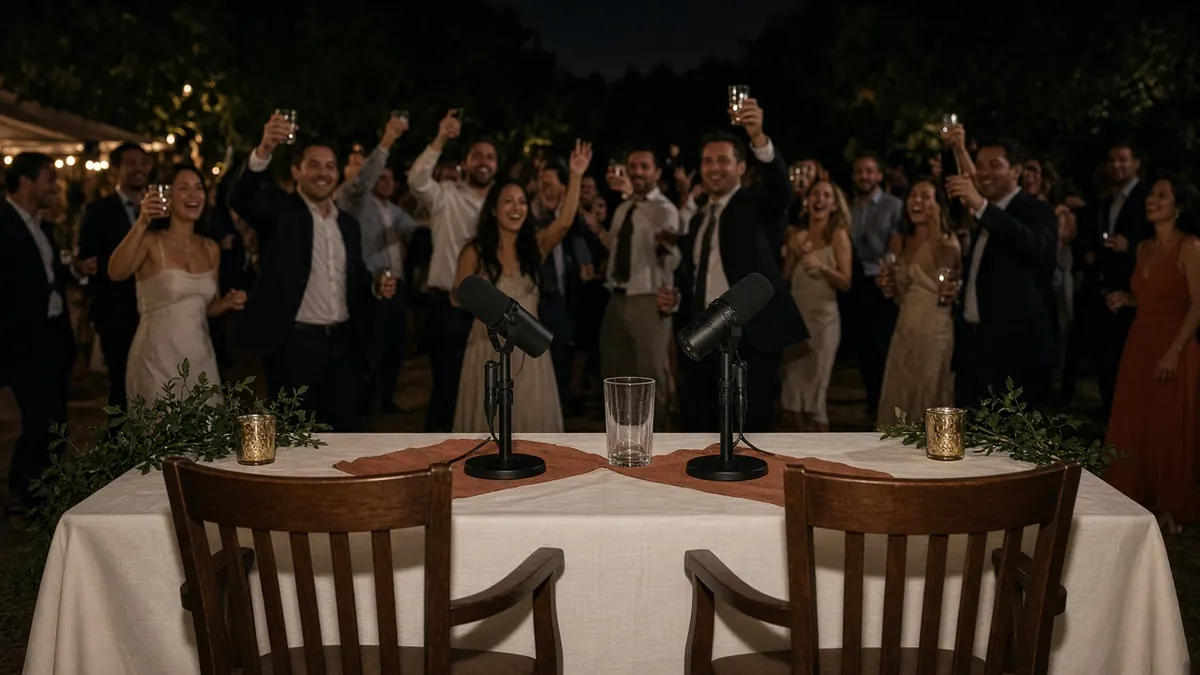
Can you cut a take? On the night, yes: we pause, we stand, we do not keep fishing. After the night, the couple decides what they want in the set they actually watch. File formats, edits, and timing are confirmed when you book. We will not invent a public kit here.
Who owns the files? Recordings are for the couple. That is the public line. Legal entity language lives on the privacy policy for enquiry data. We will not invent a courtroom answer in a blog post.
Do we publish guest voices? Not as a default. A face on a public feed is a separate yes. Sitting down is not a release form for the internet. Identifiable video is personal data. That is a tone, not a badge. We are not “GDPR certified.”
Recommendation: decide the social rule before the day. Private keepsake unless everyone in the clip later says yes. If the date is the question, Check availability with the venue and that rule in one note.
Brief the planner on boundaries before the day
The worst time to invent a pause line is while the best man is already mid-punchline. The planner already sends date, venue, languages, and a timing window. Add four boundaries to that same note.
- Who should sit first, and who should not sit alone.
- Topics that are out: exes, money, fertility, the family fight from 2014.
- The pause line, and who may walk a too-drunk guest back to the party.
- The social rule: files for the couple; posting is a separate yes.
The couple knows which story is tender. The planner knows which uncle will test the corner. Do not fetch the couple from the dancefloor to police a cousin. A photobooth can swallow a drunk joke and spit out a prop. A two-mic conversation cannot. Tell the planner it is two chairs and a talk, and that a pause is success.
Recommendation: one page with the couple. Then the same page with the planner. If you need a second page, you wrote a speech.
What to do next
- Name the five modes with the wedding party.
- Write the pause line and the drunk line.
- Mark who may walk a guest away from the table.
- Write the social rule: keepsake first.
- Send that page through Check availability, or message WhatsApp if the date is close.
The mechanic is small on purpose. Two mics. Two chairs. A pause that protects the file. That is what to do when a wedding podcast story goes sideways and you still want a night you can replay.
Frequently asked questions
Can you cut a take?
On the night we pause and stand up. After the night the couple decides what they keep. Edits and timing are confirmed when you book, not as a public kit here.
Who owns the files?
Recordings are for the couple. We will not invent a legal-entity lecture on this page. Enquiry data is described on the privacy policy.
Do you publish guest voices?
Not as a default. Sitting is a yes to talk for the couple. A public post is a separate yes.
What if a guest is too drunk to sit?
Do not seat them. A friend walks them to water and the party. The couple is not the bouncer. A dare “for the camera” is not consent to a keepsake.
What if someone cries?
Keep the take if they want it. Pause if they ask. Tears on a true thing are often the file that should stay.
Is a pause rude?
No. A pause is a feature. Thank them, ask for the memory under the joke, and stand if it is only heat.
What should the planner hear before the day?
Who sits first, which topics are out, the pause line, who handles a too-drunk guest, and that posting is not automatic.