
The uncle who flew from Chicago did not come to Spain to write lots of love in a book that already looks abandoned by dessert. He will, however, go silent if you point a camera at him and say be funny. I host the two-microphone table. Getting wedding guests talking on camera is seating, pairing, a scene on a card, and a pause — not a speech for the room.
A table often hears real voices when two people sit the way they would at dinner. The card asks for a scene. Nobody has to perform. One guest into a voicemail is how you get a job interview. Nobody named here.
- Put the table where cocktail feet already go.
- Seat two people. Never send one guest into a voicemail.
- Write prompts that ask for a scene, not a toast.
- Soften the job-interview guest with a smaller ask.
- Pause a roast before it becomes a keepsake nobody wanted.
- Let shy people watch one round first.
- Call success before open bar: two good talks beat a queue.
The short landing is how it works. The day mechanic lives in how a wedding podcast works. This page is the mouth problem: how to get wedding guests talking on camera without forcing a speech.
Put the table where cocktail feet already go
I have watched a beautiful table die behind a service door. Linen. Two broadcast mics. Zero traffic. Guests cannot sit in a corner they never pass.
The pattern looks like this. Cocktail hour is when people wait for photographs. Hands want a drink. Feet already know the path to the terrace. Put the table on that path. Not on the dance floor. Not against the speakers. Not where waiters sprint with plates.
A photobooth queue is a different job: a face and a prop. This table is two chairs and a talk. Hide it and you get silence. Park it in the flow and curiosity does half the work.
Recommendation: walk the venue once with the planner. Point at a corner guests already use. If you need a second opinion on the corner, the short list on questions is enough.
Pair people — do not send one guest into a voicemail
One person facing a lens is a voicemail. They say their name. They say congratulations. They flee. That is an audio guestbook phone with extra lighting.
Two people across a table is a conversation. They look at each other. They interrupt. They remember the kitchen story. The camera is furniture. That is the whole product in one picture.
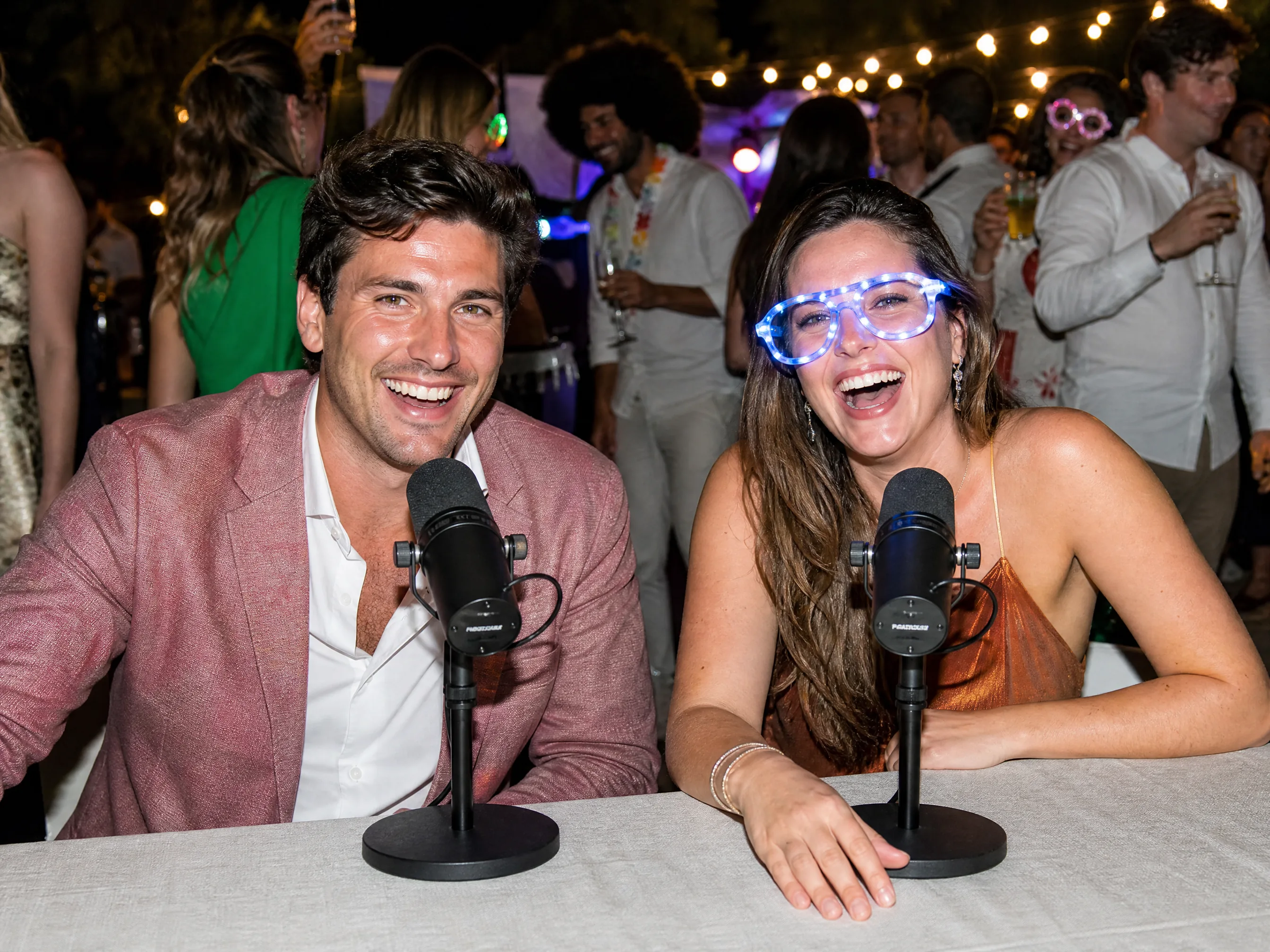
Conceptual still: two chairs pulled in, two mics, a card face-down. Not a named ON WEDDING podcast wedding.
A table often hears two aunts who have not spoken since 2014. They share a pair of headphones-of-the-soul: two mics and one prompt card. I do not introduce them as a reunion. I seat them because they already know the couple. The talk starts because there is a second person, not because I asked for a speech.
Recommendation: write a pairing note with the planner. Cousin with cousin. Travel friend with travel friend. Do not send a shy parent in alone “to be authentic.”
Write prompts that ask for a scene, not a toast
A toast asks for a performance. A blank card asks for a speech. A scene prompt asks what happened. Wedding podcast prompts work when they sound like a friend, not a gameshow.
Useful shapes, not a sacred list from a real shoot. The first time you saw them in a kitchen. The trip that went wrong and then right. The small thing they still do. A wish you would rather say than write.
| Ask | What you get | Use it? |
|---|---|---|
| Be funny now | Panic, then a joke that dies | No |
| Any message for the couple | Lots of love. Next. | No |
| Tell the kitchen story or the trip story | A scene two people can share | Yes |
Industry lists love a ten-year guess and “best advice.” Fine as a backup. Weak as the only card. Advice turns some guests into consultants. A scene keeps them in the room.
Skip prompts about exes, money, and fertility. Those are not icebreakers. They are landmines you handed to the camera.
Recommendation: approve four cards with the couple. Leave one card that says they can ignore it and just talk. Write the cards in the languages people will actually use. Do not claim eight languages as a service fact.
Handle the job-interview guest
Some guests treat the table like a hiring panel. They sit up. They list qualities. They say the couple is hardworking and kind. Then they thank us for the opportunity. I have heard this more than once. Nobody named here.
The fix is not a funnier host. The fix is a smaller ask and a second person. “Tell the story of the first dinner” is smaller than “sum up their marriage.” If they still freeze, let them watch the next pair. Sitting down is voluntary. Forcing a parent into a microphone is how you get a stiff thirty seconds and a bad memory of the ask.
English and Spanish can live in one sentence. Destination lists mix both. Guests should speak as they speak. I do not translate every line like a stand-up act. The other person at the table does the natural work.
Recommendation: if someone starts a resume, smile and point at the scene card. If they want to leave, thank them and let them go. Kind is faster than clever.
Handle the roast that needs a pause
The best man sometimes arrives with a set. He has tested it on the group chat. He wants an audience. A two-mic table is not a stage, but it can look like one if you grin and let him cook.
A roast that needs a room should not become the file the couple watches in ten years. The pause is a feature. I stop the take. I ask for the story under the joke. If the story is warm, we keep going. If it is only heat, we stand up and return to the party.
This is not humiliation content. Dirty or cruel lines about relatives do not belong on a keepsake. Funny and warm is the line. Viral shame is not.
Recommendation: brief the wedding party once. The table collects memories, not a second best-man speech. Sitting down is consent to talk. Posting a face later is a separate decision.
Let shy people watch one round first
Shy guests are not a defect. They are people who do not want to fail in public. A stranger with a microphone makes that worse. A friend they already know makes it easier. That is a field habit videographers repeat, and it matches what I see at the table.
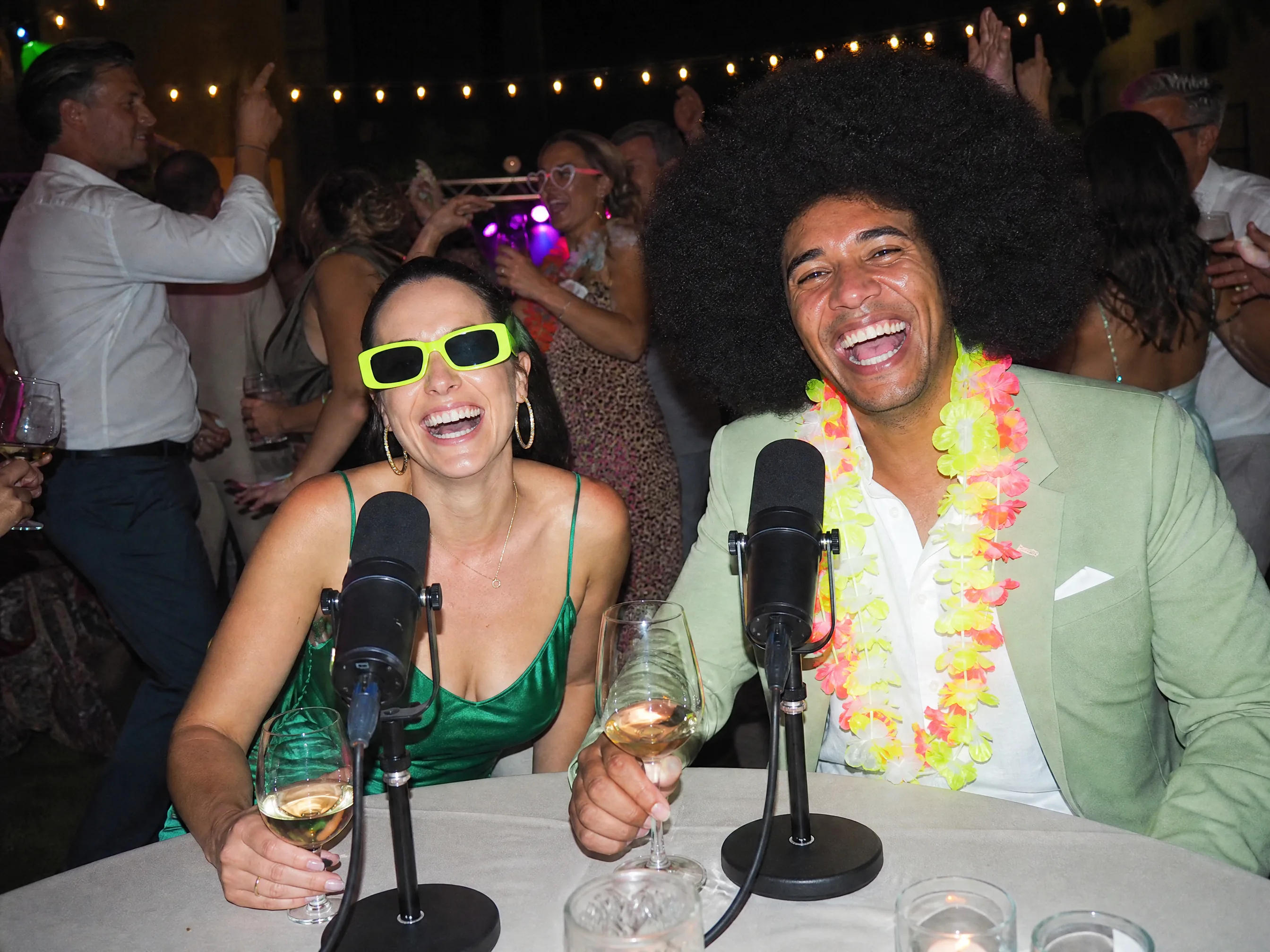
Conceptual party-flash still of a two-mic conversation. Not a documentary of a named wedding.
Let them watch one round. They hear that nobody is being grilled. They see two chairs, not a booth countdown. Then a person they like says, come sit with me. That ask beats a loud announcement from the DJ.
Some still will not sit. That is allowed. A quiet cousin who watches and later writes a note is not a failure. A forced close-up of a frightened face is.
Recommendation: pick one outgoing person in the wedding party. They go first with a friend. They mention the table once, kindly. Then stop selling it.
Decide what success looks like before open bar
Open bar later can still work if the corner stays understandable. I will not promise a volume fight with a DJ. Success is not a queue around the table. Success is two or three conversations the couple will actually replay.
Call that target before the day. Parents before they leave. The friend who flew farthest. The pair who will otherwise only meet in a photograph. After that, extras are gifts. They are not a quota.
We will not invent coverage hours or a staff count. Share the timeline. We confirm what fits. The files are professionally recorded video and audio. Packaging is not a public kit list here.
If the table belongs on your date, use Check availability with the venue and the hour you want people sitting. One note is enough.
Recommendation: do not schedule the table against vows or speeches. Those hours already have a job. Cocktail is the usual window. After dinner is the softer one.
What to do next
- Mark the cocktail path on the floor plan.
- Write four scene prompts and one “just talk” card.
- Pair six people who should not sit alone.
- Name one friend who will sit first.
- Send the note through Check availability, or message WhatsApp if the date is close.
The mechanic is small on purpose. Two mics. Two chairs. A card that asks for a scene. That is how mouths open when the night is already loud.
Frequently asked questions
Will shy guests sit down?
Some will, some will not. Let them watch one round. Seat them with a person they already like. Nobody is forced. A kind mention beats a loud announcement.
Do you need a host doing stand-up?
No. You need a table that looks like the wedding and a card that asks for a scene. I host the corner. I do not translate every joke between pairs.
What if someone cries?
Keep the take if they want it. Tears at a two-mic table are often the file the couple keeps. Pause if they ask. Do not treat crying as content to milk.
Can guests speak two languages?
Yes. They should speak as they speak. English and Spanish can live in one sentence. Tell us what the room will actually use. We will not list eight languages as a fact.
How do you stop a roast that goes too far?
Pause. Ask for the story under the joke. Stand up if it is only heat. A roast that needs an audience should not become the keepsake.
How do you get wedding guests talking on camera without a speech?
Pair two people. Put the table on the cocktail path. Ask for a scene, not a toast. Let shy guests watch first. That is the whole method.
Is this a video guestbook phone or a photobooth?
No. A phone is one voicemail. A booth is a face and a prop. A wedding podcast table is a conversation on video for the couple, not a Spotify show.