
The cousin who landed at noon is already answering like a job interview. The uncle whose plane is still over France has an empty chair saved like a sacrament. Someone wants two mics to wait until every suitcase is in the room. I host the table. Jet lag and late landings are a tired-mouth problem — not a failed chapter, and not a reason to hide the furniture until the last boarding pass.
A table often hears “we’ll start when the last flight lands.” The pattern looks like this: a drinks pocket already wandering, two chairs empty for a plane, a tired mouth that would have talked an hour ago. Late is a landing. It is not a pause button. Nobody named here.
- Treat tired mouths as a chapter, not a failure.
- Do not save the table for the last landing.
- Pair a talker with a jet-lagged witness.
- Write prompts that do not demand a performance.
- Split night-before energy from wedding-day energy.
- Keep the talks that happened if someone skips.
- Send the landing note with the date.
The night-before chapter lives in wedding podcast at welcome drinks the night before. Who sits first lives in who sits first at the wedding podcast table. Destination rooms live on Spain. This page is only late landings: tired mouths, a plane that is not a pause, a skip that is still a keep.
Tired mouths are not a failed chapter
A wedding podcast is two chairs and two broadcast mics at the party. Guests sit, talk, leave voices on video. Entertainment now. A keep after. Not a Spotify show. Barcelona is the original market. Coverage is Spain. Jet lag is a different job. Mouths are slow. That is a person who flew, not a broken sit.
A table often hears the tidy line: “Wait until they perk up — we want good energy on camera.” That is a kiosk wish. This furniture hired a conversation. A tired cousin can still tell the train story. They will not roast if they did not sleep.
The pattern looks like this. Someone wants unique entertainment and a peppy take from the same two mics. Then a guest who cleared customs at lunch treats the linen like a visa interview. Nobody named here needed a bounce-back documentary. They needed permission to sound like a person who just landed.
Recommendation: write tired as allowed. “Slow is still a story.” If the line says perk up or wait until they look awake, rewrite it.
Do not save the table for the last landing
A plane is not a pause button. People already on the terrace have a wander. Hold both chairs for a delayed uncle and the loose mouths leave. The late arrival then sits into a room that already chose dancing.
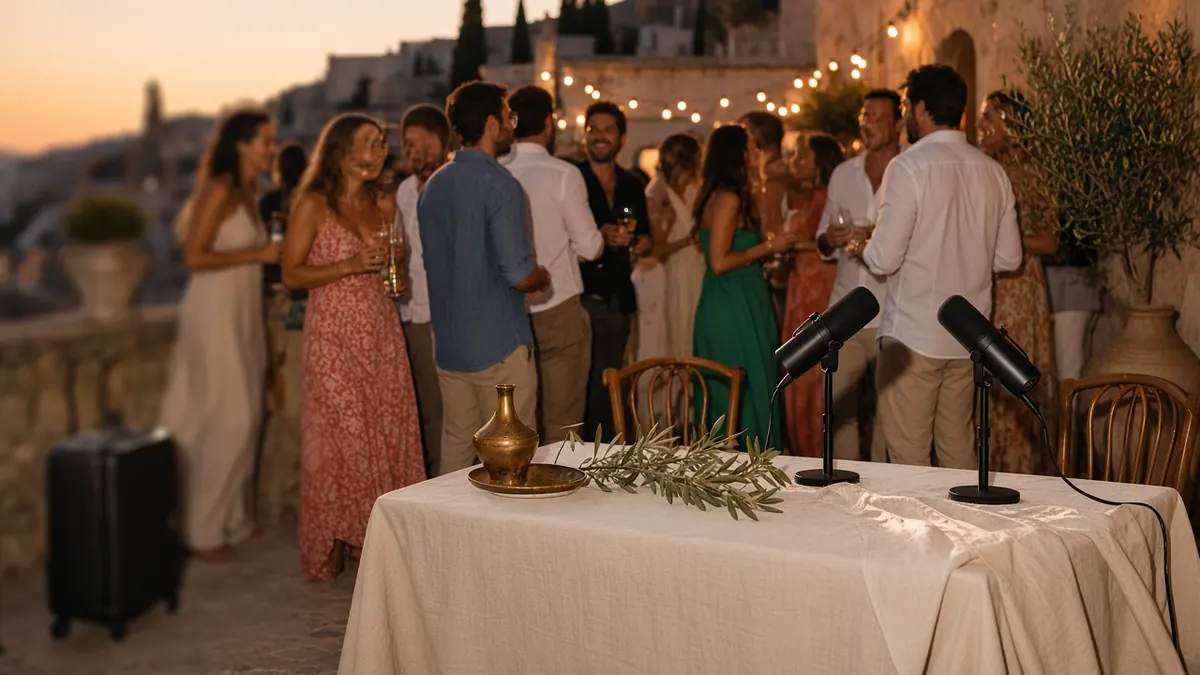
The pattern looks like this. A planner saves the corner “until the New York flight.” Cocktail happens without the mics. The uncle lands and wants water. A table often hears nothing because the furniture waited for a boarding pass. Nobody named here missed a cue. The hold did.
I start when glasses are in hands. Late guests join if they want. They do not owe a make-up sit because a plane was late. Sitting is voluntary.
Recommendation: mark start as “when drinks wander, not when the last bag clears.” Keep the door for hugs. Keep the mics where a glass already is.
Pair a talker with a jet-lagged witness
Two exhausted people can turn a sit into a shared silence. Two comedians who slept can turn it into a set. The useful pair is uneven on purpose: one mouth that starts a scene, one tired witness who was actually on the trip.
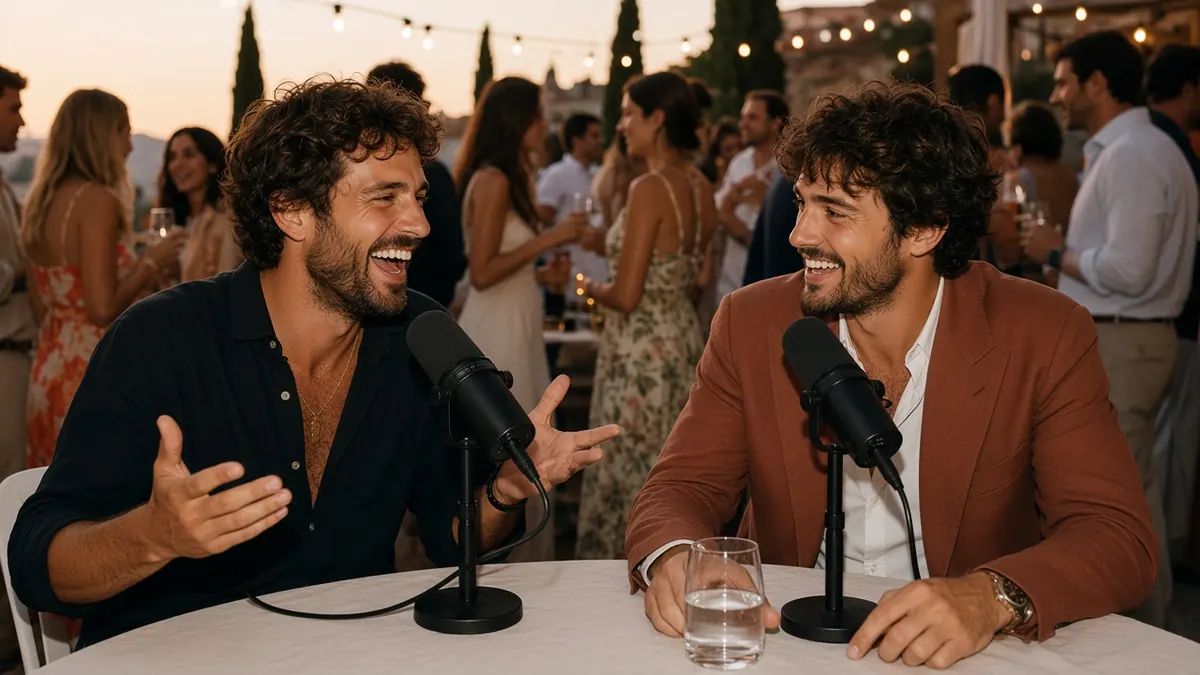
A table often hears “put the two jet-lagged cousins together, they share the flight.” Shared turbulence is not a conversation. The pattern looks like this. Both stare at the card. Both wait for the other to be funny. Nobody named here needed a silent duet. They needed a talker who slept, and a witness who can add the delay.
Who opens the room is a different page. This page only asks: is one of them awake enough to start? I do not send a tired guest into a voicemail. I also do not make the delayed uncle host because he “just arrived with stories.”
Recommendation: pick one person who already talks and the friend who landed. Not two silent seats.
Prompts that do not demand a performance
A tired mouth can give you a scene. It cannot give you a toast. Ask for the wrong train, the first coffee, the house with not enough chairs. Skip the meeting story if you wanted that when everyone is dressed. Skip the roast. Skip marriage advice.

The pattern looks like this. Someone writes “tell us how they met” because it is the famous card. The guest who wants water tries to be charming. A table often hears a job-interview adjective: kind, lucky, soulmates. Nobody named here needed a speech from a person with a boarding pass still in a pocket. They needed one minute that sounds like the trip.
Full cards live on another page. This page only says: do not demand a performance from a jet-lagged mouth. A short scene is a keep. A forced toast is a file you will skip later.
Recommendation: write three soft cards that can end in a minute. If a card asks for advice, a roast, or the aisle, throw it away.
Night-before vs wedding-day energy
Friday travel clothes and Saturday ceremony clothes are not the same tired. Night-before mouths are loose and unfinished. Wedding-day mouths have already stood for vows. Same furniture. The energy is not a copy-paste.
A table often hears “do it Friday so Saturday stays pretty” or the reverse: “save every tired guest for the wedding so the files match the dresses.” Both are kiosk clocks. The pattern looks like this. Friday gets a census of whoever landed. Saturday then has no wander because someone declared the guestbook done. Or Saturday waits for the last landing and Friday never sits.
Nobody named here needed one night to finish the other. They needed the chapter the tired people are actually in. The night-before job already lives on its own page. This page only names the energy: travel-tired versus ceremony-tired. Soft prompts on both. No homework transferred between nights.
Recommendation: write which night the tired guests will actually wander. If the line says finish Friday, or save every late arrival for Saturday, split it.
What you still keep if someone skips
A skip is not a failed census. Sitting is voluntary. The keep is the conversations that happened — professionally recorded video and audio for the couple, not a Spotify episode. The uncle who went to bed still had a wedding. He did not owe two mics a breakfast take.
| Guest state | Table job | Sit? |
|---|---|---|
| Landed, can talk | Pair with a talker; one soft scene | Yes if they want |
| Waiting on a plane | Do not hold the room | No empty chair for a flight |
| Asleep or skipped | Keep what already happened | No |
| Night-before travel tired | Soft prompts, not the aisle | Yes if they want |
| Wedding-day ceremony tired | Short scene, not a roast | Yes if they want |
The pattern looks like this. Someone counts empty chairs and decides the chapter failed. A table often hears “we missed the important people.” Important is a feeling. The keep is faces who sat. Nobody named here needed a breakfast encore. This page only says: a skip does not erase the talks you already have.
Recommendation: write skip as allowed. “Whoever sits, we keep.” If the line says catch them at breakfast, delete breakfast.
Send the landing note with the date
The worst time to invent a hold is while a planner is already refreshing a flight board. Add four landing lines to the same note as date and venue.
- Start when drinks wander. Do not save chairs for the last landing.
- Pair a talker with a jet-lagged witness. Not two silent seats.
- Soft prompts: trip and coffee, not a roast, not the aisle.
- A skip is allowed. Keep what happened. No breakfast encore.
You can see table language on Instagram — setup films, not a named wedding. We do not publish a landing-clock.
Recommendation: the same four lines with the couple, then the planner. Send the date through Check availability.
What to do next
Name tired mouths as allowed. Do not hold for a plane. Pair a talker with a witness. If the date is close, message WhatsApp. When the date and the landing note sit in one place, Check availability.
Frequently asked questions
Should we wait for the last landing before we open the table?
No. Late is a landing. It is not a pause button. Start when drinks wander. Late guests join if they want.
Will jet-lagged guests sit down?
Some will. Sitting is voluntary. Tired mouths can still tell a short scene. Do not treat a slow answer as a failed chapter. Do not fetch a guest from a nap.
What if someone skips because they are exhausted?
Keep the conversations that happened. A skip is not a failed census. Do not invent a breakfast encore.
Is the night before better than the wedding day for tired guests?
They are different tired. Friday is travel-tired. Saturday is ceremony-tired. Use the chapter the tired people are actually in. Do not finish one night so the other can skip talking.
Which prompts work for jet-lagged mouths?
Scene prompts that can end in a minute: the delay, the first coffee, the house with not enough chairs. Skip advice, roasts, and the aisle.
Do we need a host doing stand-up to wake people up?
No. Two chairs, two mics, a soft card, a talker paired with a witness. Kind pointing beats a microphone announcement. Tired guests sit because they want to talk, not because someone warmed the room.
What should we send with the date?
Four lines plus the house: start when drinks wander; talker plus jet-lagged witness; soft prompts; skip is allowed. We confirm what fits. We do not publish a landing-clock SLA.