
A cousin will treat a new corner like a fire drill if nobody said what it is. I host the two-microphone table. How to tell wedding guests about the podcast table is one honest sentence, the paper they already hold, and a person who points — not a DJ asking the room to scan a code that does not exist, and not a homework sign leaning on the olives. Sit, talk, leave a voice. That is the whole announcement.
A table often hears the wrong job first. Someone whispers “is this the speeches?” Somebody else hunts a QR. The pattern looks like this: two chairs, two mics, a conversation. Nobody named here has to perform.
- Write the one-line job before anyone prints a card.
- Put that line on the paper guests already hold.
- Brief the wedding party, not a microphone announcement.
- Point with a body, not a homework sign.
- Let the first pair sit so the room can copy.
- Do not say “be funny,” “you have to,” or “scan this.”
- Send the four-line brief so the planner can announce it.
The short landing is how it works. Once they sit, mouths need seating and a scene — that lives in how to get wedding guests talking on camera. Planner notes sit on for wedding planners. This page is only the tell.
Write the one-line job before anyone prints a card
If you cannot say the job in one breath, the room invents a worse one. A wedding podcast is two chairs and two broadcast mics at the party. Guests sit, talk, leave voices on video. Entertainment now. A keepsake later. Not a show cousins subscribe to. Not the wedding film. Not a photobooth with a better lamp.
The public sentence is small on purpose. Sit. Talk. Leave a voice. A table often hears “an interactive multimedia memory activation.” That is a fire drill. Nobody named here asked for a seminar. Write the line with the couple before anyone opens a design file. “Two chairs. Talk about us. Optional.” If it mentions a feed, a 30-second toast into a phone, or a code to scan, rewrite it. QR guestbooks need a tutorial. This table needs an invite.
Recommendation: lock one sentence. If you need a second, use the planner pair: guestbook alternative and entertainment — not a channel, not the film.
Put it on the paper guests already hold
Guests already carry a thing: a welcome note, a weekend timeline, a ceremony program. That paper is where the line belongs. They do not need a second object that looks like homework.
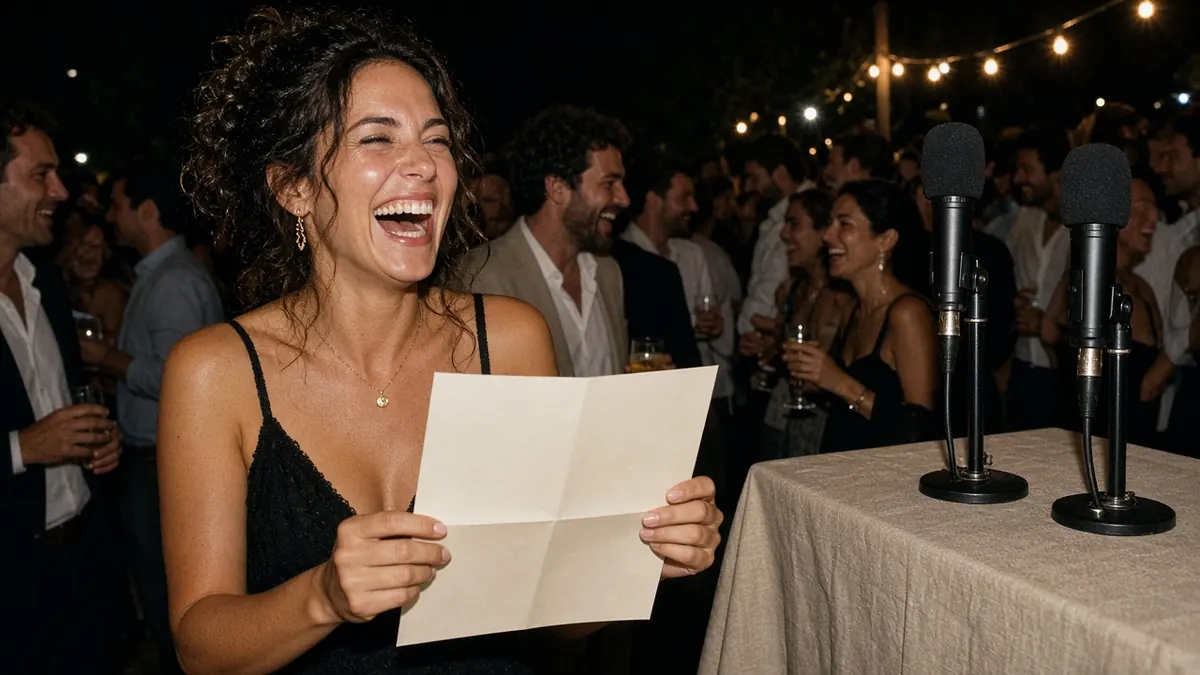
The pattern looks like this. A couple print a framed essay: what it is, how long to talk, how to hold the phone sideways. A table often hears people photograph the frame and never sit. SERP loves that frame because SERP is selling a scan. We are not. One quiet line is enough. “During cocktail, two chairs if you want to leave a voice.” We do not print programs or sell an easel. You already have paper. A website can carry the same sentence if guests look there for cars. Destination lists mix English and Spanish — write the languages people will read. We do not invent an eight-language menu.
Recommendation: one line on paper they already hold. If you only have a WhatsApp group, send the line once — not “surprise later,” which makes anxious uncles.
Brief the wedding party, not a microphone announcement
Kind mention from a person beats a loud announcement. That is already true on the process page, and more true at midnight when the DJ has a microphone and a theory. A table often hears a well-meant stage bit. “EVERYBODY has to do the podcast before cake.” The room laughs. Then nobody wants to be first. Sitting down is a choice. We do not promise every guest will sit.
QR guestbooks hand the MC a scan-and-thirty-seconds script. Fine for that product. This table has no card to scan. Brief the wedding party the day before: the one line, permission to walk someone over, permission to let a shy parent watch first. Do not hand them a roast to debut at the mics.
Recommendation: three people, one sentence, no stage. If someone wants a public thank-you, keep it short: “Two chairs if you want to talk.” Then send a pair.
Point with a body, not a homework sign
I have watched a beautiful sign die next to the olives. Linen. Perfect type. Zero traffic. Guests walk around objects that look like work. They follow people they already trust.
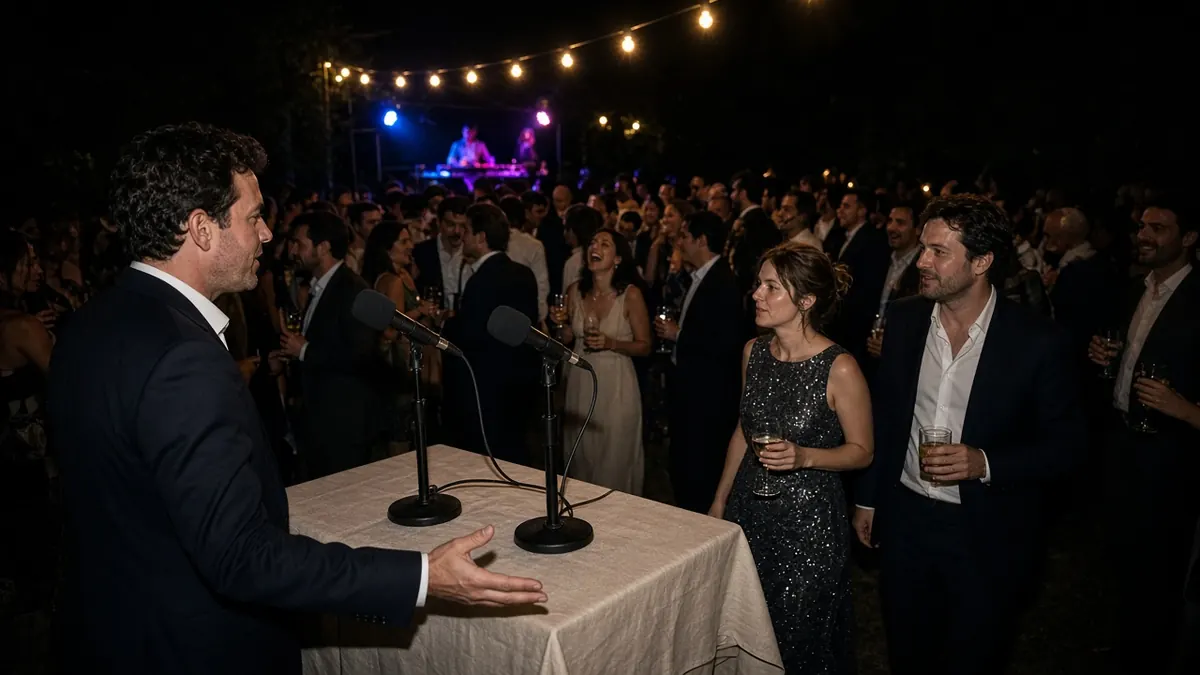
The pattern looks like this. Someone points with a chin. “That corner. Two chairs. We just sat. It is not a speech.” The next pair goes because a body went first. A photobooth queue is a face and a prop. This table is two people and a talk. Placement is a sibling page. The tell still needs a person even when the corner is right. Forcing a parent into a microphone is how you get a stiff thirty seconds.
Recommendation: pick two people whose only job is to walk and point. Give them a drink, not a sign. Skip the easel and the clipboard.
Let the first pair sit so the room can copy
The announcement the room believes is not the paper. It is the first two people who look comfortable. Shy guests do not want to fail in public. A friend already sitting makes it easier.
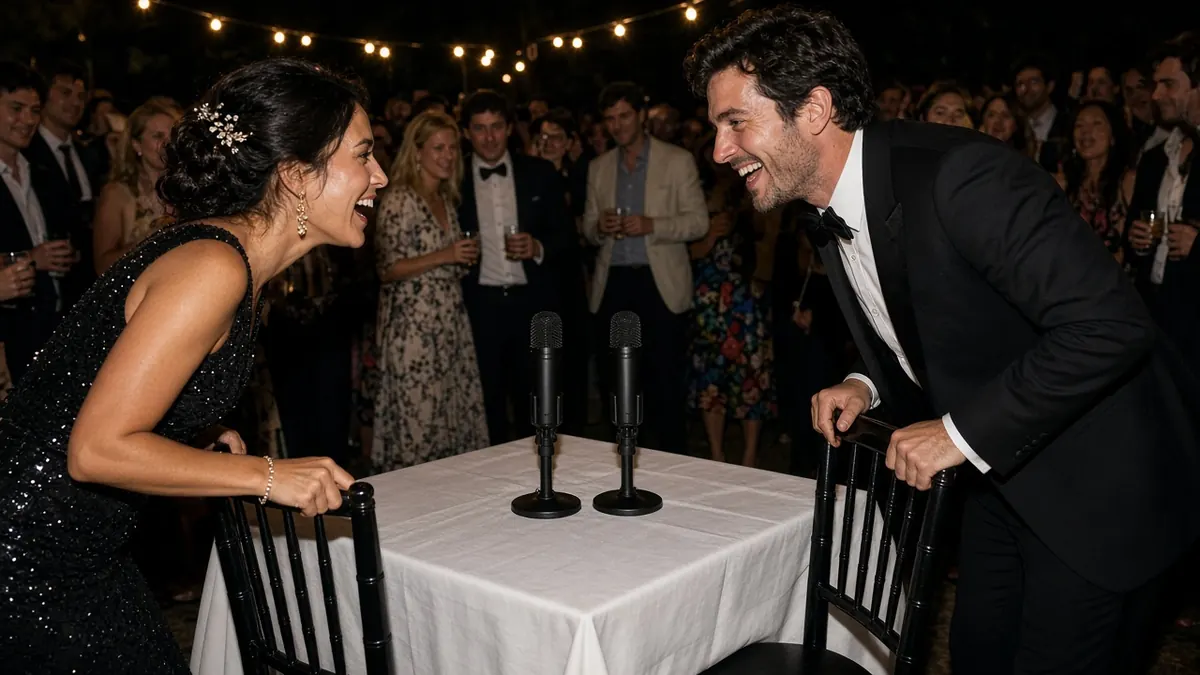
A table often hears a couple try to go first “to show it is safe.” Sometimes the room treats that like a performance by the people in the dresses. Nobody named here. Two friends from the same trip copy better. They sit. They laugh. Other people steal the idea. Let shy people watch one round. Do not hover filming the watchers. Guests speak as they speak. Prompt language is confirmed when you inquire — we will not invent a list here.
Recommendation: seed two pairs before open bar if the window is cocktail. Do not seed a speech or a roast. If a take goes sideways, that protocol is a different page. The room copies what it sees.
What not to say at the chairs
Words around the chairs become the job. Say the wrong ones and you get a job interview, a roast, or a voicemail.
| What someone says | What the guest hears | Say this instead |
|---|---|---|
| Be funny now | A test | Tell the kitchen story if you want |
| You have to do this | A chore before cake | Two chairs if you feel like it |
| Scan this / thirty seconds | A phone guestbook | Sit. Talk. Leave a voice |
| Any message for the couple | Lots of love. Next | What happened that first dinner |
The pattern looks like this. A helpful uncle turns into a consultant. He lists qualities. He thanks us for the opportunity. The fix is a smaller ask and a second person — that is the talking page. Skip a public tease about exes, money, or fertility. Skip “we will post every take tonight.” Files are for the couple. Posting a face is a separate yes.
Recommendation: write three forbidden lines on the same note as the one-line job. If a friend starts a scan-code speech, smile and point at the chairs. Do not correct them on a microphone.
Send the brief so the planner can announce it
The worst time to invent the sentence is while the DJ is already aiming at the stone. Send date, venue, languages. Add the tell. One page. Timing and power live on the vendor page. This page only adds what guests should hear.
- Job: sit, talk, leave a voice — optional conversation, not a speech.
- Paper: one line on the note guests already hold, same languages they read.
- People: three names who will walk and point. No stage bit.
- Forbidden: “you have to,” “be funny,” “scan this,” “we will post it tonight.”
We do not publish a guest-count formula or a minute when the DJ must speak. Share the timeline; we confirm what fits the day. If the date and the sentence are the question, Check availability with those four lines in the note.
Setup films of the corner live on Instagram. That is not how you tell the room. Named weddings only with permission.
Recommendation: the same four lines with the couple, then the planner. Do not leave “what do we say?” for the welcome drink.
What to do next
- Write the one-line job. Cut anything that sounds like a channel.
- Put the line on paper guests already carry.
- Name three people who will point. No microphone speech.
- Seed two comfortable pairs. Let shy people watch.
- Send the note, or message WhatsApp if the date is close.
Two mics. Two chairs. One sentence the room can steal. That is how to tell wedding guests about the podcast table. When the four lines are ready, Check availability.
Frequently asked questions
How do we tell guests about the podcast table?
One line: two chairs, a talk, a voice on video, optional. Put it on paper they already hold. Ask three people to point. Do not run a scan-code speech.
Should the DJ or MC announce it?
A loud census announcement turns a conversation into a chore. Kind mention from a person beats a stage bit.
Do we need a printed sign?
No WPS stationery kit lives on this page. One line on paper they already carry is enough.
Should we put it on the wedding website?
Yes if guests already look there for cars. Use the same one line. Keep it optional.
Will shy guests sit if we tell them in advance?
Some will, some will not. We do not promise every guest will sit. Honesty plus a first pair they can watch beats a surprise camera.
What if guests think it is a speech?
That is the fire-drill sentence. Rewrite the line until it says conversation, not performance. Pair people. Never send one guest into a voicemail.
What should we send the planner?
Date, venue, languages, the one-line job, who will point, and the forbidden lines. Timing and power sit on the planner page. Sitting and prompts sit on the talking page.