
The family-photo alley already has a queue. The aunts are in height order. Someone still wants the two-microphone table on the same stone “so the pictures look busy.” I host the guest table. How to keep the photographer and the podcast table off the same mark is two jobs that both want faces — not one entertainment corner, and not a second photo line with chairs.
A table often hears a planner draw one star and write photo-plus-podcast. The pattern looks like this: posed aunts, two mics, nobody sitting because sitting would block the group. Two jobs. Two marks. Nobody named here needed a busy corner. They needed a look, and a pocket.
- Name two jobs that both want faces.
- Keep the table out of the family-photo alley.
- Give the photographer a look, not a queue.
- Keep table flash off their key light.
- Split cocktail wandering from posed groups.
- Write the photographer four lines, not a shot list.
- Send the two-mark note with the date.
The six-line packet lives in how to brief a wedding planner for a podcast table. The vendor landing is for wedding planners. Process sits on how it works. This page is only the collision: photographer and table, two marks, one date.
Two jobs that both want faces
A wedding podcast is two chairs and two broadcast mics at the party. Guests sit, talk, leave voices on video. Entertainment now. A keepsake later. The photographer covers the day: groups, wandering, the faces the couple asked to keep on stills. Complementary. Not the wedding film with a second hat.
A table often hears “put them together so we only light one corner.” That is a booth wish. Two jobs that both want faces are not one entertainment corner. The pattern looks like this. The photographer already booked the stone by the olives for family. Someone stacked the chairs on that stone. Then nobody sat, because sitting would be rude, and the groups had nowhere to stand.
Spain’s original market is Barcelona. The room still needs two marks. Nobody named here wanted a fight. They wanted portraits that look like portraits, and conversations that sound like mouths.
Recommendation: write the split in one line. “Photos on the booked stone. Table on the drinks, one pocket off.” If the line says one corner, rewrite it.
Do not put the table in the family-photo alley
The alley is a facing-forward minute. Grandparents. Order of height. Two chairs in that line turn a conversation into a blockage. Guests will not sit on a runway.
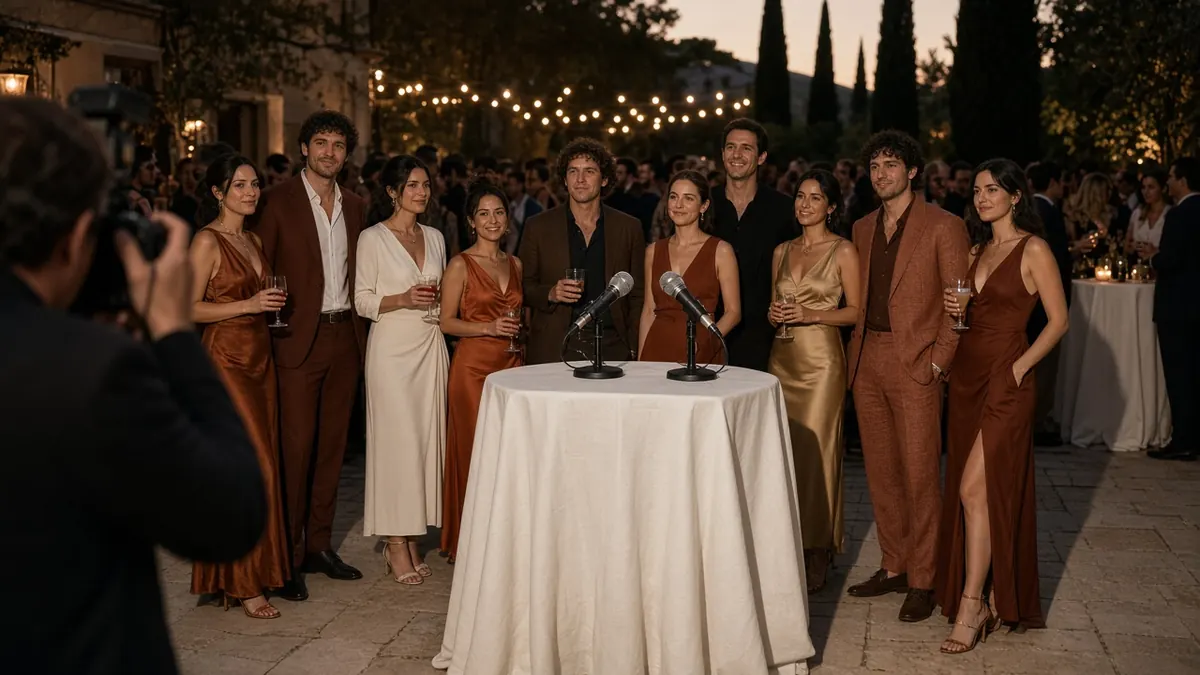
The pattern looks like this. A floor plan had empty white next to the photo wall. A table often hears “the entertainment can live there.” Then an uncle is mid-story and an aunt is mid-pose, and both jobs fail in the same frame. Nobody named here ruined the portraits. The star did.
Hide the chairs in the alley and the table becomes a second photo line. People hold drinks and wait to be arranged. Sitting stays voluntary. Voluntary does not mean “stand here until we need the stone.”
Recommendation: mark the alley as photo-only. If you cannot pose a group without moving a mic, you put the furniture in the wrong job.
Give the photographer a look, not a queue
Photographers should see the table. Faces at two mics are a gift if they can take a look and leave. A gift dies when the look becomes a sit-queue: “everyone who talks also stands for a frame.” Then the chairs are a booth with longer sentences.
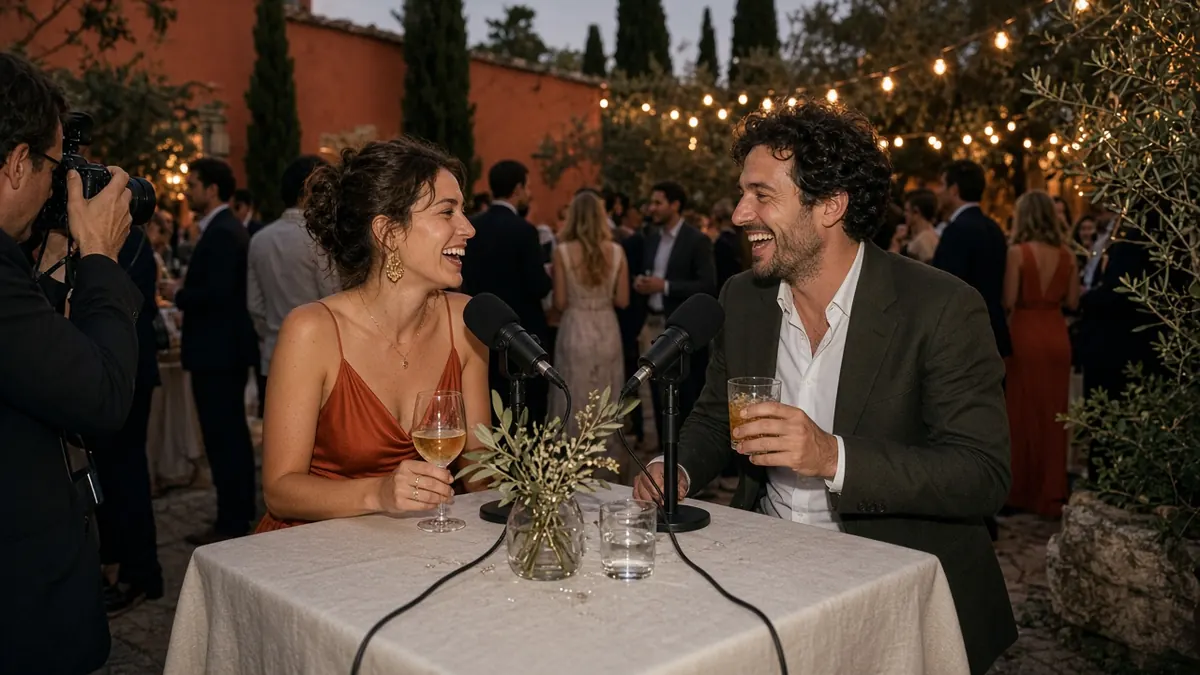
A table often hears the sentence that turns a conversation into homework: “After you sit, wait for the photographer.” The pattern looks like this. Kind. Fatal. People perform a still. They forget the prompt. The couple later owns a row of grins and almost no story. Nobody named here needed a second line. They needed one look from the side, then the next pair.
The photographer is not the operator. Complementary means they cover the day; this records guest conversations. A look is a few stills if the light is already good. A queue is a vendor cue you did not hire.
Recommendation: write “look, not queue” for the photographer. If a note says hold the chairs for portraits, cut it.
Flash vs their key light
On-camera flash on a party table is a look we like for the keep: faces, linen, the room behind. It is a problem if that flash sits inside the photographer’s key light on the posed stone. Groups go flat. Guests squint.

The pattern looks like this. Someone wants the table “in the pretty light.” Pretty light was booked for portraits. A table often hears bounce and key and a fight about who owns the wall. Nobody named here needed a lighting plot. They needed one pocket off the posed groups so a mouth stays human and a group stays a group.
We do not publish a watt number. The public sentence is pocket-off. If their key is on that wall, the chairs are not on that wall. Cocktail flash at the table can live where drinks already go.
Recommendation: mark “table flash off their key.” If the new idea is sharing the same lamp, keep the lamp for the groups. Keep the mics where a glass can find them.
Cocktail wandering vs posed groups
Cocktail feet hunt a drink. That is when people sit. Posed groups hunt an aunt. That is when people stand in height order. Stack those jobs on one minute and one stone, and the wandering dies. The groups also wait.
A table often hears “family photos during cocktail, podcast in the same pocket so nobody walks twice.” Efficient on paper. Rude in a body. The pattern looks like this. The photographer calls names. The chairs wait like a second roll call. Guests who wanted to talk go refill instead. Put the furniture on that wander, not on the group list.
This page does not own speeches or the first dance. It only splits cocktail: groups on the booked stone, table on the drinks, one pocket off. If cocktail is already a dance, say so in the note. Do not invent a miracle minute between the last cousin and the opening canapé.
Recommendation: name two cocktail marks. If you cannot hear glasses from the seat, you hid the table in a photo job.
What to write in the vendor note
The photographer does not need our six-line planner packet. They need four lines that keep their alley clean. Do not paste a photobooth rider. Do not invent a badge, a meal, or a shot list we do not publish. Do not ask them to census who sat.
The pattern looks like this. Someone forwards the couple’s Instagram and writes “unique entertainment, please cover.” Then the photographer treats two mics like a booth queue. A table often hears coverage when it needed a look. Complementary is not “also photograph every prompt.” Setup films of the table live on Instagram — furniture, not a named wedding.
Write that sitting stays optional so nobody deputizes the photographer as an MC for the chairs. One operator at the table.
Recommendation: if a line does not protect a mark, delete it. Kind mention from a person beats a microphone announcement. This packet is two marks, not a shop.
Send the two-mark note with the date
The worst time to discover the table was “in the photo corner” is when grandparents are already in height order. Send the same four lines with the couple, then the planner, then the photographer. Venue name belongs with the date.
- Two marks: family-photo alley is not the table.
- Photographer gets a look, not a sit-queue.
- Table flash stays off their key light — pocket off the posed stone.
- Cocktail: groups on the booked stone; chairs on the drinks.
Recommendation: paste those four with the date and the house. If the date and those two marks are the question, Check availability with the lines in the note.
What to do next
- Name two jobs that both want faces. Refuse one corner.
- Keep two chairs out of the family-photo alley.
- Give the photographer a look. Do not invent a second queue.
- Keep table flash off their key. Put the pocket on the drinks.
- Send the four lines, or message WhatsApp if the weekend is close.
Two mics. A look from the side. An alley that stays an alley. If the date and those two marks are the question, Check availability with the photographer’s name in the note.
Frequently asked questions
Can the photographer and the podcast table share one corner?
No. They both want faces. One corner turns the table into a blockage and the groups into a wait. Two marks. Photos on the booked stone. Chairs on the drinks, one pocket off.
Why not put the table in the family-photo alley?
The alley is a facing-forward job. Two chairs in that line block the group and stop anyone sitting. Mark the alley as photo-only.
Should the photographer photograph every guest who sits?
No. Give them a look, not a sit-queue. Complementary means they cover the day; this records conversations. Holding chairs for portraits kills the story.
Will the table flash ruin the portraits?
It can, if the chairs sit inside their key light. Put the table one pocket off the posed stone. We do not publish a watt number. Pocket-off is the public sentence.
Can family photos and the table both run in cocktail hour?
Yes, on two marks. Groups on the stone you booked. Table on the drinks. Do not stack both jobs on one minute and one wall.
What should we write the photographer?
Four lines plus the date: two marks, look not queue, flash off their key, cocktail split. Do not paste a photobooth rider or ask them to census who sat.
Do we need a host doing stand-up so the photographer knows the corner?
No. Two chairs, two mics, a pocket off the alley. Kind pointing from a person. The photographer gets a look. Guests sit because they want to talk, not because a corner is a show.