
The cream book is already collecting the same six words when the grandmother is still hunting for a blank page and the cousin who flew from Chicago still has a kitchen story sitting in his mouth. I host the two-microphone table. Paper guestbook and wedding podcast together is not a taste fight. It is two keepsakes that can share a night if they do not share a queue.
A table often hears “put the book on the linen, it is all guestbook.” The pattern looks like this: a pen dying on the mics, a line that looks like work, and a cousin who never sat. Nobody named here. A signature is a line. A kitchen story is a file.
- Name two keepsakes and two jobs.
- Put the book where hands already pass.
- Put the table where mouths can stay human.
- Print a small card beside the book.
- Leave ink for people who will not sit.
- Do not combine both jobs in one queue.
- Send the two-object note with the date.
The object comparison already lives in video guestbook vs traditional wedding guestbook. How guests sit lives in how it works. Practical rows live in questions. This page is only the night protocol: two marks, one card, no shared line.
Two keepsakes, two jobs
A paper guestbook captures handwriting you can hold later. A name. A wish. Sometimes a tiny drawing. That is a real keep. Nobody here is going to mock a grandmother for wanting a page she can open on a shelf.
A wedding podcast, as ON WEDDING podcast uses the words, captures a conversation. Two chairs. Two professional microphones. Guests sit, answer a prompt if they want, leave faces and voices on video. Entertainment during the party. A keepsake after. Not the wedding film. Not a Spotify show. Not Houston tenemos una boda.
A table often hears one line item: “the guestbook.” Then a planner treats ink and talk as the same SKU. The jobs split as soon as a guest arrives. One object asks for a hand. The other asks for a mouth and a scene.
Recommendation: write both jobs in one line before the floor plan. “I want handwriting I can hold” is a book brief. “I want friends talking on camera” is a table brief. You can want both. Do not write “modern guestbook” and hope furniture decides.
Put the book where hands already pass
Hands already pass a gift table, a drinks line, a welcome landing. That is where a small closed book earns its keep. Guests can sign without making a second pilgrimage that looks like homework.
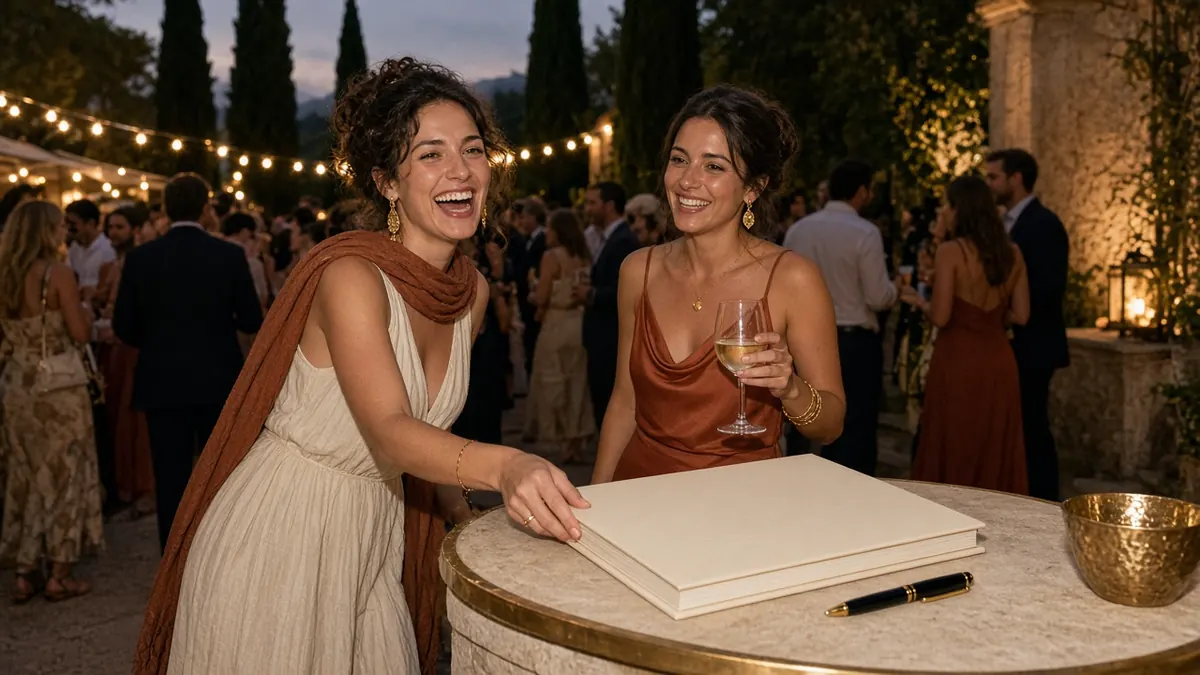
The pattern looks like this when it works. Book on the path people already walk. Pen that actually writes. Enough light to see a page. A short pause, then the party continues. Nobody named here needed a velvet rope around a cream cover.
A table often hears the failure: the book parked at the entrance as a bottleneck, or hidden in a dark corner “so it feels intimate,” or dropped on the podcast linen “to save a table.” That last one turns two jobs into one messy square.
Recommendation: mark the book where hands already go. Do not make signing the ticket to a drink. Do not hide it so well that only the planner finds it at midnight.
Put the table where mouths can stay human
The conversation table needs a pocket. Still on the drinks. One step off the book path. Close enough that people see two chairs and wander. Far enough that a sentence is not written over a signing queue.
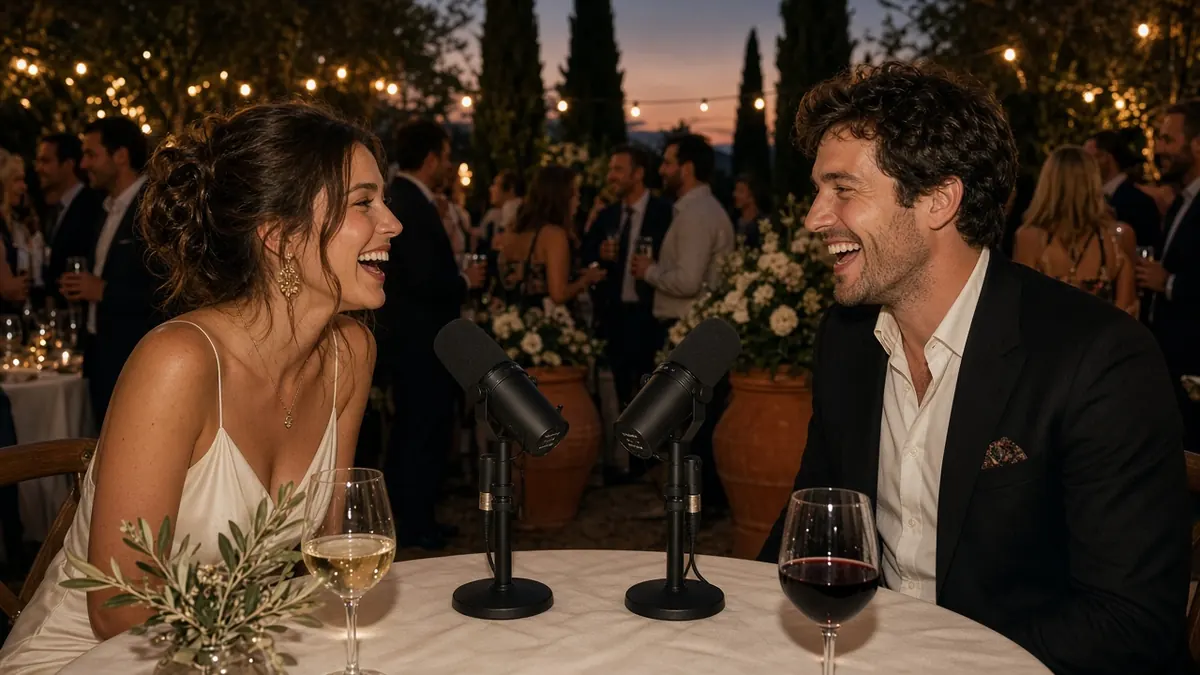
How the table works is already written. Sitting stays optional. Two people, not a squeeze of six. A prompt if they want one. Professionally recorded video and audio for the couple. I have watched a terrace lose the pocket because someone treated the chairs as overflow from the book. Pens on the grille. Empty mouths. A cousin who still had a story.
The pattern looks like this when it works. Book on the pass. Table one pocket off. Guests sign, then wander. Some sit. Some only watch. Nobody is forced into either object.
Recommendation: two marks on the floor plan. If the venue only has one pretty alcove, give it to the table and put the book on the drinks path. Do not hide the chairs in a closet “so the book can breathe.”
What to print on a small card beside the book
Guests should not have to guess which object wants a hand and which wants a sentence. A small card beside the book does that job. One or two lines. Not a speech. Not a QR novel.
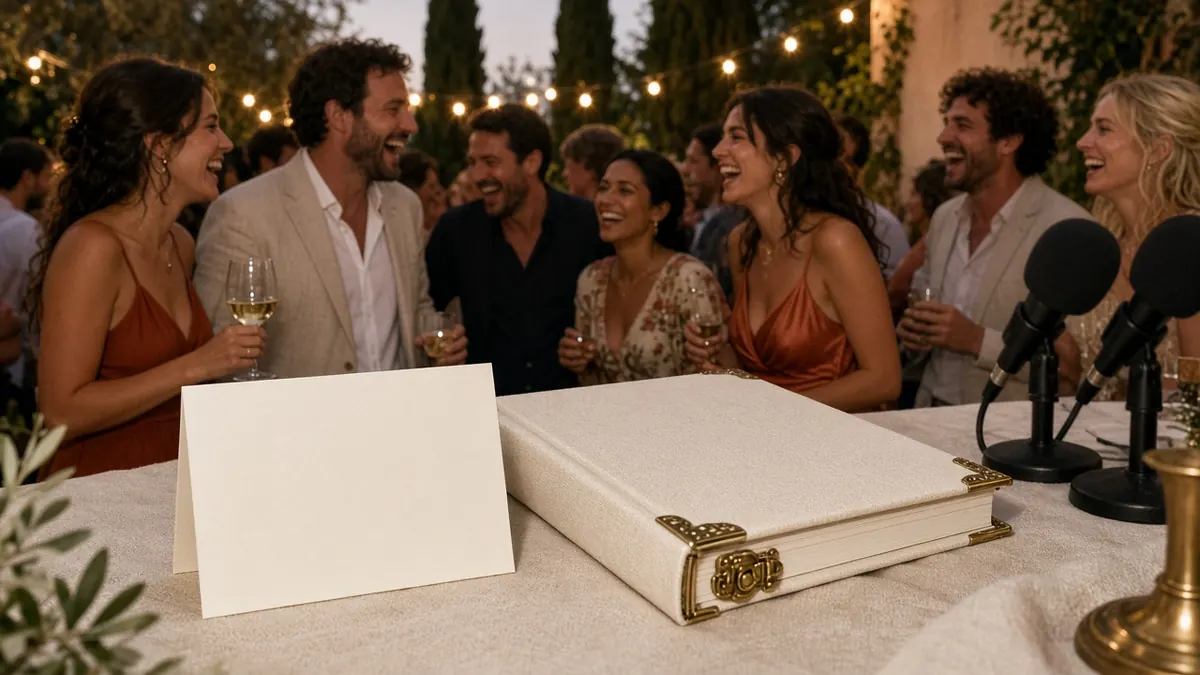
Print something human. The book is for a line you can hold. Two chairs over are for a story on camera if you want one. Sitting is optional. You do not have to do both. You do not have to do either.
A table often hears the card that tries to be a third product: a QR upload, a hashtag, a “record your toast here,” all stapled to the same cream square. Then nobody knows where to put a hand. Nobody named here needed three guestbooks on one card.
Recommendation: one card, two objects, optional sit. If you also want phone uploads, that code lives somewhere else — welcome note, table, a different stick. Not on the podcast linen and not as a footnote under the pen.
Who still wants ink
Some guests will never sit. That is not a failure. Older relatives who flew and still want a page. Friends who hate cameras and love a pen. People who will watch one round at the table and then write a wish they can stand. Children sometimes draw in books; the cover of this page will not make a child the picture.
Leave the book for them. Do not turn ink into a consolation prize for “people who missed the modern thing.” Handwriting is a keep. A conversation is a keep. They are not ranked.
The pattern looks like this. A grandmother signs, watches two friends talk, and never sits. A cousin sits and never writes. An uncle does both. Nobody named here needed a census clipboard at the cream cover.
Recommendation: brief the wedding party in one sentence: the book is for anyone who wants a page; the table is for anyone who wants a scene. Kind mention beats a stage announcement. Do not send shy people into the chairs as a dare.
What not to combine in one queue
Two objects can share a night. They cannot share a mouth. The failure modes are furniture, not personality.
| Do not | Do this instead |
|---|---|
| Book on the podcast linen | Book on the pass; table in a pocket |
| One queue for sign-then-sit | Two paths; sitting stays optional |
| Signing as a ticket to sit | Either object, neither, or both |
| QR + pen + mics on one square | One job per square of linen |
| A booth queue parked on the book | Hats and prints in their own corner |
Verdict by fit, not by rank: Keep the book if you want ink. Keep the table if you want a conversation on camera. Keep both if you want both keeps. None of these is “best” as a global rule.
A table often hears the run sheet treat book, booth, phone, and mics as “guest fun.” That is how you get one line and four jobs. Photobooths still make pictures, not paragraphs. A vintage handset is still one speaker. Those fights have other pages.
Recommendation: print the do-not list for the planner walk-through. Argue about the two marks, not a slogan from a “which is better” post.
Send the two-object note with the date
The worst time to discover the book is sitting on the mics is when the grandmother is already hunting for a page and the cousin is already treating the chairs as a coat rack. Add four object lines to the same note as the date.
- What you want to hold later: handwriting, a conversation on video, or both.
- Where each object sits — book on the pass, table in a pocket — not one shared queue.
- The card line: sign here if you want ink; sit there if you want a story; neither is required.
- Whether a booth, a phone, or a QR album is already booked, so we do not stack a third job on the linen.
Setup films of the table live on Instagram. That is the corner, not a paper-book catalogue. Named weddings only with permission.
Recommendation: the same four lines with the couple, then the planner. If the date and the two objects are the question, Check availability with those lines in the note.
What to do next
Circle two jobs. Two marks. One card. Leave ink for people who will not sit. Keep the signing line off the mics. A signature is a line. A kitchen story is a file. If the date is close, message WhatsApp. When the four lines are ready, Check availability.
Frequently asked questions
Can we have a paper guestbook and a wedding podcast at the same wedding?
Yes. Different keeps. Put the book where hands already pass. Put the table one pocket off that path, still on the drinks. Do not share one queue.
Where should the paper guestbook sit?
Where hands already go — gift table, drinks line, welcome landing. Not on the podcast linen. Not as a bottleneck at the door if that line already looks like work.
Where should the podcast table sit?
In a pocket where a human voice still works. Still on the drinks. One step off the book path. Sitting stays optional.
What should the card beside the book say?
One or two lines: the book is for a line you can hold; two chairs over are for a story on camera if you want one. Sitting is optional. Do not staple a QR novel to the same card.
Who still wants to sign the book?
Guests who will never sit. Relatives who want a page. Friends who hate cameras and like a pen. Leave ink for them. Do not treat the book as a consolation prize.
Do guests have to sign and sit?
No. Some will sign. Some will sit. Some will do both. Some will only watch. Do not force a census at either object.
What should we send with the date?
Four lines: which keeps you want, where each object sits, the card line, and whether a booth, phone, or QR is already booked.